
Crawl Space Encapsulation & Spray Foam in Chattanooga, TN
Nobody understands the science of building better than Foametix. If you want to create a thermally efficient and air tight space, it's not enough just to insulate. You must choose the right insulation and air sealing system for the application, and be sure it's properly installed. At Foametix, we fully seal our crawlspaces ensuring you won't need a dehumidifier. Trust a veteran-owned insulation company in Chattanooga.
No Dehumidifier Required
If your home has a musty smell that won't go away, cold floors every winter, or humidity you just can't get a handle on, the problem is almost always under your feet. Most crawl spaces in the Chattanooga area are damp, vented, and wide open to the soil — and that moisture doesn't stay down there. It rises straight up into your living space, carrying odors, mold spores, and allergens with it. That's exactly what crawl space encapsulation puts a stop to.
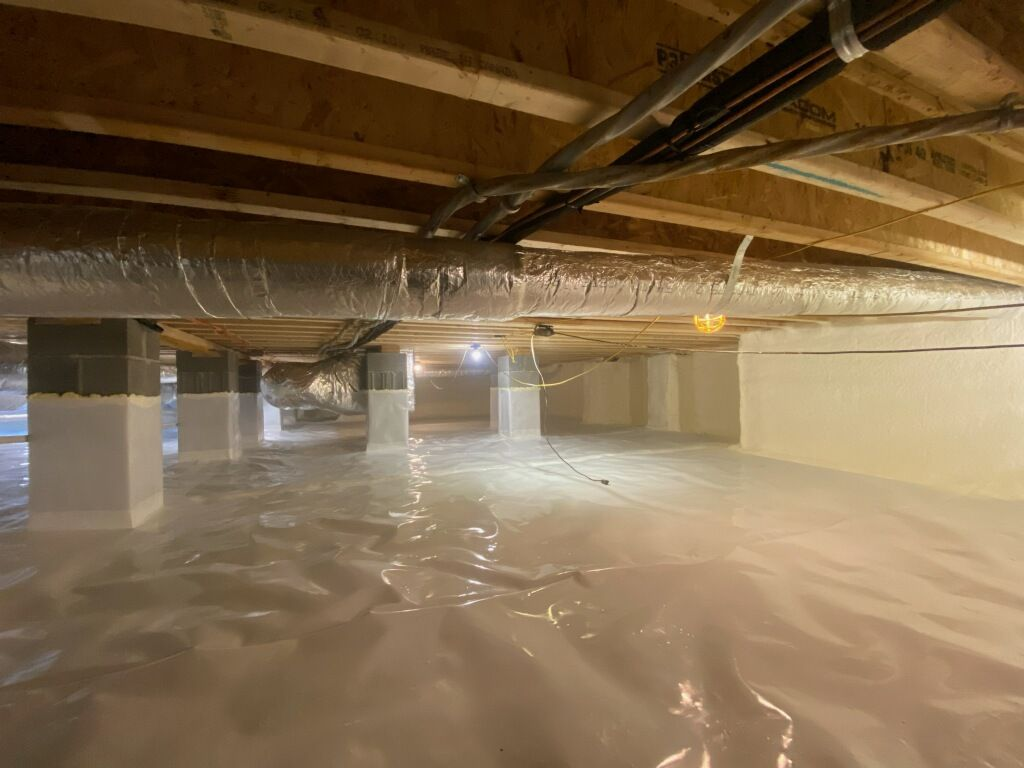
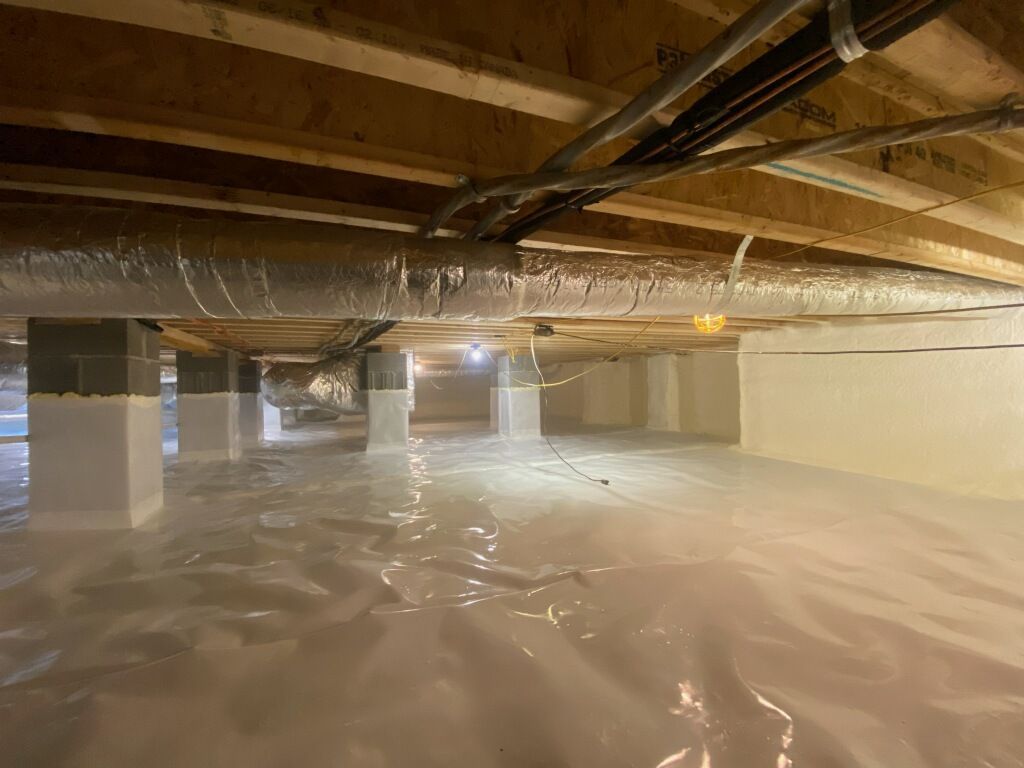
Foametix encapsulates your crawl space by sealing it completely at the source. We spray closed-cell foam across the foundation walls and rim joists, lay down a heavy-duty reinforced ground cover, tape every seam, and wrap every pier. Top to bottom, the space is sealed tight — so moisture, soil gases, and outside air simply have no way in anymore.
Here's what sets us apart: you'll never need a dehumidifier. Most crawl space companies seal the space and then sell you a dehumidifier to fight the moisture that still sneaks in — one more machine to run, maintain, and replace. We seal it so thoroughly there's no moisture to fight in the first place. No equipment on your power bill, no service calls, no humidity creeping back.
The result is a clean, dry, controlled environment under your home. The musty smell disappears, your floors get warmer, and your energy bills drop. Most homeowners head back down after we're done and think the same thing: dang, this is actually kinda nice down here.
To be clear, this isn't waterproofing — it's complete crawl space encapsulation, done right. And it's done by a veteran-owned Chattanooga crew that's been sealing crawl spaces the same careful way for over 17 years. No franchise fees, no subcontractors, no shortcuts.
Crawl Spaces & Basement
Insulation and Remedy
There may not be an area of the home that creates a bigger hazard to the occupants health than that of typical crawl spaces.
Most homes with crawl spaces are not properly insulated for moisture control and this can pose health concerns for the occupants, especially children.
Lack of properly sealed and insulated crawl space can allow deadly and odorless gases to affect occupants. It can also become breeding ground for insects, rodents and mold. In addition, it could cause damage to the foundation and the floor system.
WE KNOW HOW TO DO IT
WE KNOW HOW TO DO IT
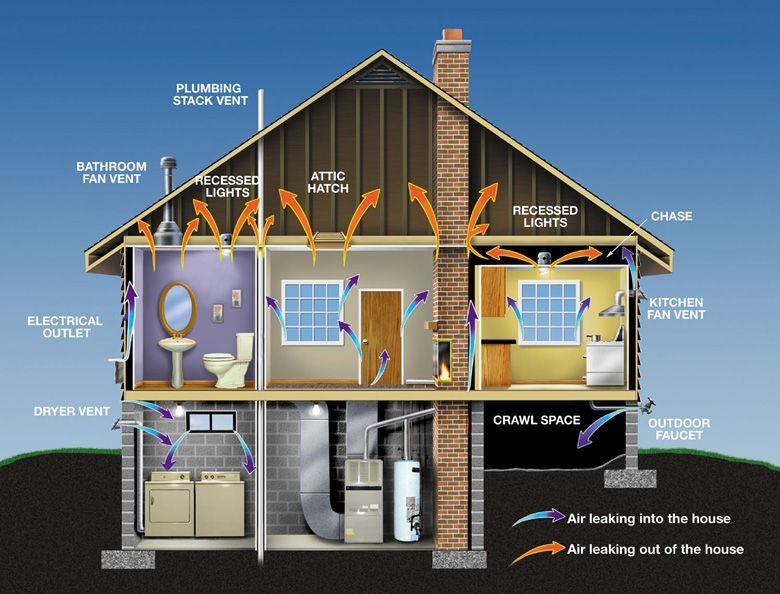
The Stack Effect
Crawl spaces are often damp, humid spaces due to water runoff from rain, irrigation systems or an elevated water table. While the residential building code requires crawl space ventilation, this ventilation does virtually nothing to mitigate moisture problems and can actually make moisture problems worse.
Houses operate like chimneys.
If you introduce a hole at the bottom of a chimney, a natural draft ensues as air exits the top of the chimney.
This is called stack effect.
Attic ventilation is the top of the chimney and crawl space ventilation is the bottom.
As air is drawn up through your house, moisture, mold spores, odors and soil gases from the crawl space find their way into the living space.
WE KNOW HOW TO DO IT
The Solution
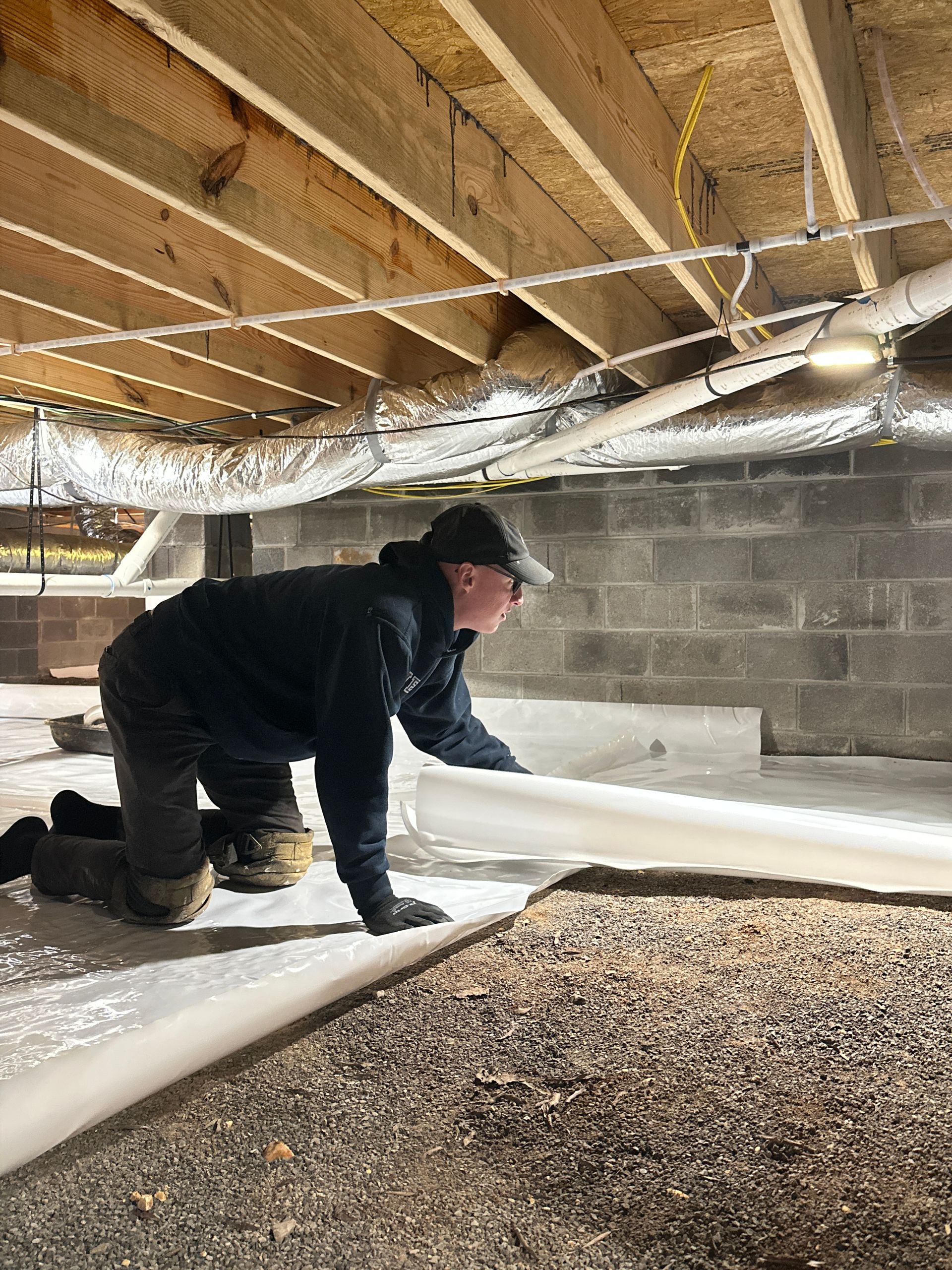
Crawl space encapsulation involves sealing the crawl space walls with a Closed Cell Polyurethane spray foam application and covering the ground using a tough 15-20 mil, reinforced polyethylene sheeting (not some thin 6 mil poly) taped carefully at the seams and adhered to the top or bottom of the concrete foundation wall.
Our preferred method is to spray foam the crawl space walls and rim joists, fully encapsulating the exterior perimeter of the crawl space. With this option, it is actually better to leave the floor underside un-insulated! What this does is create a completely conditioned space so there is no chance of pipes freezing, and the floors directly above are much warmer and more comfortable.
Our preferred method involves sealing the edges of the ground plastic with the wall foam, so any water that might enter through the block wall would seep its way behind the foam, under the plastic, and back into the ground. Some seams can do better long term by being left unsealed, but fully overlapped, so that water can still get back under the plastic into the ground. In cases where the water table is high, it can still be wise to seal them, but its overall better to have a fully operating sump pump in conjunction with the spray foam and plastic.
Sealing up all ventilation entering the crawl space is a specification 'if' it is decided that ventilation is not necessary for mechanicals. Sealed below this sheeting are soil gases, moisture, water vapor and odors that typically would be drawn up into the living space above.
The Foametix Solution
We are very proud of our projects because our specs are superior and our prices even better! We do not pay any enormous franchise or licensing fees to national companies, therefore, we are able to design a system that fits your home and your budget.
Nobody understands the science of building better than Foametix.
If you want to build a thermally efficient and air tight home, it's not enough just to insulate. You must choose the right insulation and air sealing system for the application, and be sure it's properly installed. Our Building Science experts understand the principles of heat, air and moisture flow, and how the building envelope interacts with a building's mechanical systems as well as its occupants.
N.A.S.A. applied one-inch of spray-on foam insulation on the Space Shuttle's External Tank that serves to insulate the tank. The closed-cell foam used on the tank was developed to keep the Shuttle's liquid hydrogen fuel at minus 423 degrees Fahrenheit and the liquid oxygen tank at near minus 297 degrees Fahrenheit even as the tank sits under the hot Florida sun while preventing a buildup of ice on the outside of the tank.
Properly insulating and sealing your homes with Spray Foam is a greener alternative.
We can help you in specifying the right insulation system for our local climate. Contact our Building Science experts with your inquiries at 423-710-2529.
Do I need a dehumidifier after crawl space encapsulation?
No — and that's the biggest difference between our system and most others. A lot of crawl space companies seal the space and then sell you a dehumidifier to deal with the moisture that still gets in. We seal the crawl space completely at the source — closed-cell foam on the walls and rim joists, a heavy-duty ground cover, taped seams, and wrapped piers — so there's no moisture to manage in the first place. That means no dehumidifier to buy, run, or maintain, and no extra cost on your power bill.
Is crawl space encapsulation the same as waterproofing?
No. Waterproofing reacts to water that's already getting in — patching leaks and managing it after the fact. Encapsulation seals the crawl space so that moisture, soil gases, and outside air never get in to begin with. We fully seal the walls, ground, seams, and piers to create a clean, dry, controlled environment under your home, instead of just chasing the problem after it starts.
Will encapsulation get rid of the musty smell in my house?
Yes. That musty smell almost always comes from your crawl space, not your living area. Damp, vented crawl spaces let moisture, mold spores, and odors rise straight up into the rooms above. Once we seal the space completely, that moisture is gone — and so is the smell. Most homeowners notice cleaner air, warmer floors, and lower humidity throughout the house.
How much does crawl space insulation cost in Chattanooga?
Pricing varies based on the crawl space size, condition, and scope of work. We provide exact written quotes after a free on-site evaluation.
What is crawl space encapsulation?
Encapsulation seals the crawl space from the ground up — closed-cell spray foam on the walls, a vapor barrier on the floor, and sealing of all vents and penetrations. This controls moisture, eliminates musty odors, and prevents pest entry.
Can spray foam fix a musty smell coming from my crawl space?
Yes. Musty smells are caused by moisture and organic growth in the crawl space. Closed-cell spray foam combined with encapsulation eliminates the moisture source and seals the crawl space from the living area above.
Do you offer crawl space encapsulation near Chattanooga?
Yes. We serve Chattanooga and a 100-mile radius across Southeast Tennessee and North Georgia. Crawl space encapsulation is one of our core services.
What People Say About Us
Foametix completely changed my crawl space. They sealed and insulated it so well that the space actually feels like part of the house now. No more random moisture or weird smells, and my home feels more comfortable overall. What I loved most is how they actually explained everything instead of just doing the work. They showed me why consistent moisture readings matter and how this could prevent bigger problems down the line. The team was professional, friendly, and really cared about doing it right. If your crawl space is a headache, Foametix is the crew you want—they make it easy, clean, and actually work.
Tristan Monroe
"Excellent work and very consistent. My company has used Foametix for nearly all our insulation needs for many years and they always deliver for us. High quality work. Employees who care about what they do. Final billing is always in line with estimate. Protective measures and final cleanup are always a high priority."
Chris B.
Excellent experience and product. Great crew. The efficiency achieved in our house, which was a full gut and remodel, continues to pay dividends. A professional team, and a really on point project manager. Great to work with, recommended!
Zachary L
Crawl Space Encapsulation Across the Chattanooga Area
No dehumidifier. A real seal. Serving homeowners across Southeast Tennessee & North Georgia.
Tennessee
Georgia
Crawl space waterproofing or encapsulation — which one does your house need?
Most people who go looking for “crawl space waterproofing” do not have a flooding problem. They have a damp, musty crawl space and waterproofing is the word that came to mind. Those are two different problems with two different fixes, and knowing which one you have saves you a lot of money.
Bulk water is liquid water getting in — puddles after a storm, mud that never dries, a wet line on the block. That comes from grading, gutters, downspouts dumping at the foundation, or a spring under the house. Handling it is drainage work: regrading, extending downspouts, sometimes an interior drain and a sump pump.
Water vapor is moisture in the air and rising out of the ground. Your crawl space is vented to the outside, so every humid day you are pulling wet outdoor air in through those vents, and it condenses on the cool surfaces under your floor. The dirt underneath gives off moisture continuously even when it looks dry. There is never a puddle, and the space is still soaked.
In this climate, the second one is what we find in the large majority of crawl spaces around Chattanooga. And it is the one encapsulation is actually built to solve.
How to tell which one you have
Signs it is bulk water:
- Standing water or soft mud after heavy rain, even if it dries out later.
- A visible water line or staining partway up the block piers or foundation wall.
- White chalky residue on the block — that is efflorescence, mineral left behind by water moving through the masonry.
- Washed-out channels or gullies in the dirt floor.
- A downspout that discharges within a few feet of the foundation, or ground that slopes toward the house.
Signs it is vapor and outside air:
- Musty smell that is worst in summer, or when the HVAC first kicks on.
- Condensation or rust on ductwork and pipes under the house.
- Hardwood floors that cup or gap with the seasons.
- Indoor humidity you cannot get below 60 percent no matter what the thermostat does.
- Cold floors in winter, and a first floor that never quite feels right.
- Insulation batts between the joists sagging or falling out — they have absorbed moisture and let go.
A cheap test you can do yourself: tape a two-foot square of clear plastic tightly to the dirt floor and leave it 24 hours. If there is condensation on the underside when you pull it up, your ground is giving off moisture. That is the vapor problem, and no dehumidifier is going to out-run it.
If you do have standing water, that comes first
We will not encapsulate over an active water problem, and you should be suspicious of anyone who offers to. Sealing a liner over water that is still coming in traps it against your framing and hides it from you.
Drainage work — regrading, French drains, sump pumps, foundation repair — is not what we do. We are insulation and encapsulation contractors, and we would rather tell you that than take the job and do it badly. When we come out and find bulk water, we tell you plainly what has to happen and who needs to do it. Once the space is dry and staying dry, we can do our part.
Sometimes the fix is smaller than people expect. Extending two downspouts and correcting the slope along one wall solves a surprising number of “my crawl space floods” calls.
What encapsulation does that waterproofing alone does not
Waterproofing manages liquid water. That is worth doing when you need it — but on its own it does nothing about the humid outside air coming in through your foundation vents, which in a Tennessee summer is the larger moisture source for most houses.
Encapsulation closes that path. We seal the vents and any other openings to outside air, cover the ground wall to wall with a heavy vapor barrier sealed at the seams and run up the foundation walls, insulate the walls or the floor system depending on the assembly, and seal the band joist. The crawl space stops being a vented outdoor space and becomes part of your conditioned envelope.
The result is a space that stays dry on its own, without a dehumidifier running under your house forever. That last part matters — a lot of companies in this market lead with a dehumidifier because it is an easy sale. It treats the symptom, and it runs up your power bill doing it.
Read more on why a dehumidifier won't fix a musty crawl space, or see every town we cover on our service areas page. If there are old batts sagging between your floor joists, those come out first — see insulation removal.