
Commercial Roof Coatings & Spray Foam Roofing
Silicone and elastomeric roof coatings, spray foam roof systems, and metal roof restoration across Chattanooga and 100 miles out. Stop the leak, skip the tear-off.
Silicone, Acrylic & Elastomeric Roof Coatings
Most flat roofs in Chattanooga do not fail all at once. They fail at the seams, at the fasteners, and around the drains and curbs - a little at a time, patch after patch, until somebody finally prices a tear-off.
A coating or spray foam restoration takes a different route. We repair what is failing, then apply a new seamless waterproof surface over the top of the existing roof. No demolition, no dumpsters, no disposal fees, no open deck. In almost every case the business underneath keeps running.
Which system your roof gets depends on how it drains and what it is made of. Silicone handles standing water and is the safe call on a roof that ponds. Acrylic is more reflective and more economical where drainage is good. Spray polyurethane foam adds real insulation and can be sloped during application to move water toward the drains.
We core the roof and check for trapped moisture before we quote, and we show you the restoration number next to the tear-off number. If the honest answer is tear-off, we will tell you that.
WE KNOW HOW TO DO IT
WE KNOW HOW TO DO IT
Building Benefits
Reducing energy bills by decreasing air conditioning needs.
Improving indoor comfort for spaces that are not air conditioned, such as garages or covered patios.
Tests show energy costs are observably lower when the attic is sealed.
WE KNOW HOW TO DO IT
Community Benefits
Reduce local air temperatures (sometimes referred to as the urban heat island effect).
Lower peak electricity demand, which can help prevent power outages.
Reduce power plant emissions, including carbon dioxide, sulfur dioxide, nitrous oxides, and mercury, by reducing cooling energy use in buildings.
WE KNOW HOW TO DO IT
What is a cool roof?
A high solar reflectance (albedo) is the most important characteristic of a cool roof as it helps to reflect sunlight and heat away from a building, reducing roof temperatures. A high thermal emittance also plays a role, particularly in climates that are warm and sunny. Together, these properties help roofs to absorb less heat and stay up to 50-60°F 10-20°C) cooler than conventional materials during peak summer weather.
Building owners and roofing contractors have used cool roofing products for more than 30 years on commercial, industrial, and residential buildings. They may be installed on low-slope roofs (such as the flat or gently sloping roofs typically found on commercial, industrial, and office buildings) or the steep-sloped roofs used in many residences and retail buildings.
Through the ENERGY STAR program, EPA and the Department of Energy (DOE) help consumers and other purchasers identify the most energy-efficient roofing products. Roofing materials with the ENERGY STAR label have met minimum solar reflectance and reliability criteria.
Based on 2016 data from more than 150 ENERGY STAR partners, shipments of cool roof products have grown to represent more than 25 percent of these manufacturers' commercial roof products and roughly 10 percent of their residential roof products.
WE KNOW HOW TO DO IT
Cool Roofs Benefit and Costs
ENERGY STAR®: qualified roof products reflect more of the sun's rays. This can lower roof surface temperature by up to 100F, decreasing the amount of heat transferred into a building.
ENERGY STAR®: qualified roof products can help reduce the amount of air conditioning needed in buildings, and can reduce peak cooling demand by 10-15 percent.
Although there are inherent benefits in the use of reflective roofing, before selecting a roofing product based on expected energy savings consumers should explore the expected calculated results that can be found on the Department of Energy's 'Roof Savings Calculator' website at
rsc.ornl.gov. (opens in new tab)
Please remember: the Energy Savings that can be achieved with reflective roofing is highly dependent on facility design, insulation used, climatic conditions, building location, and building envelope efficiency.
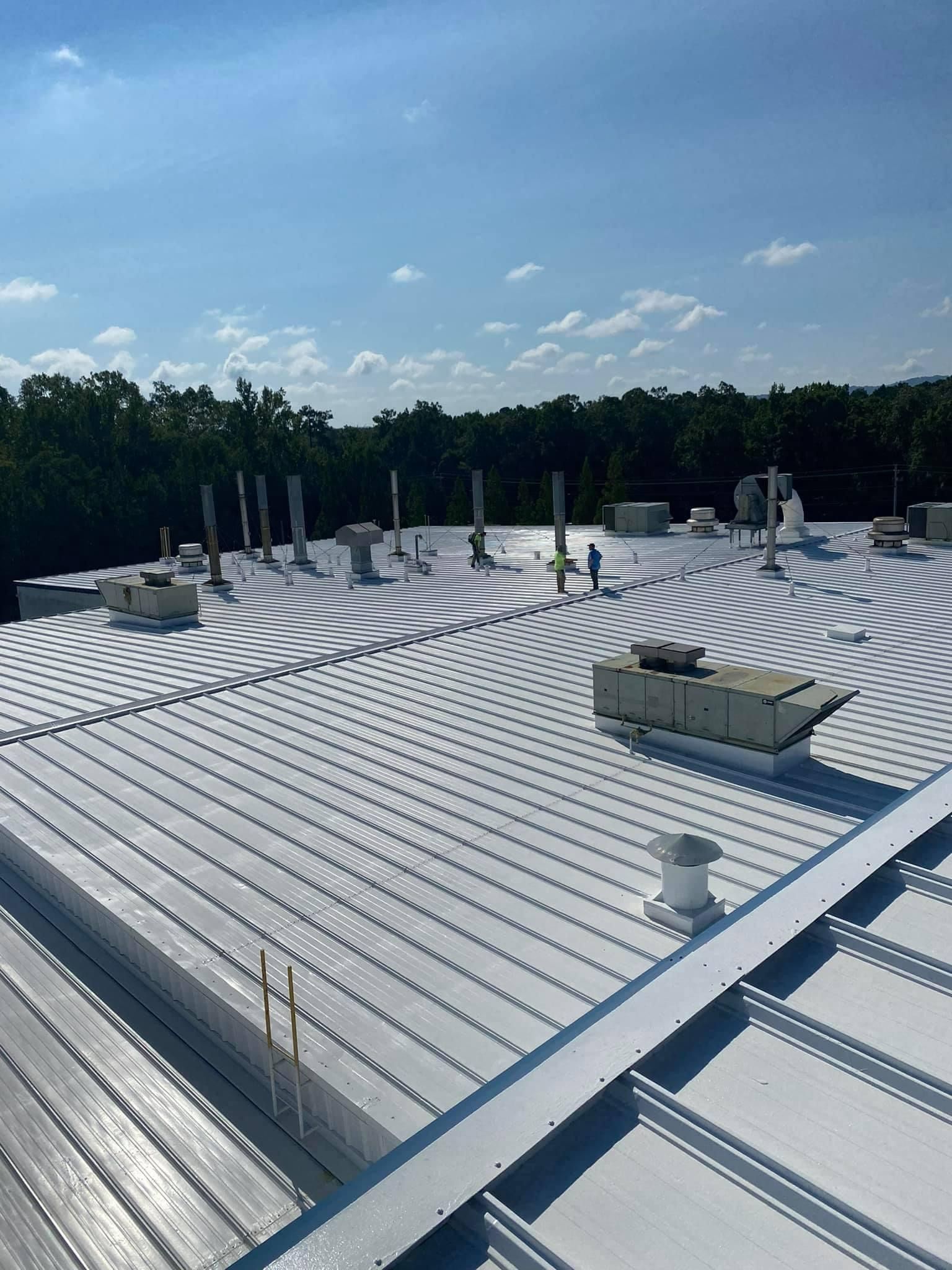
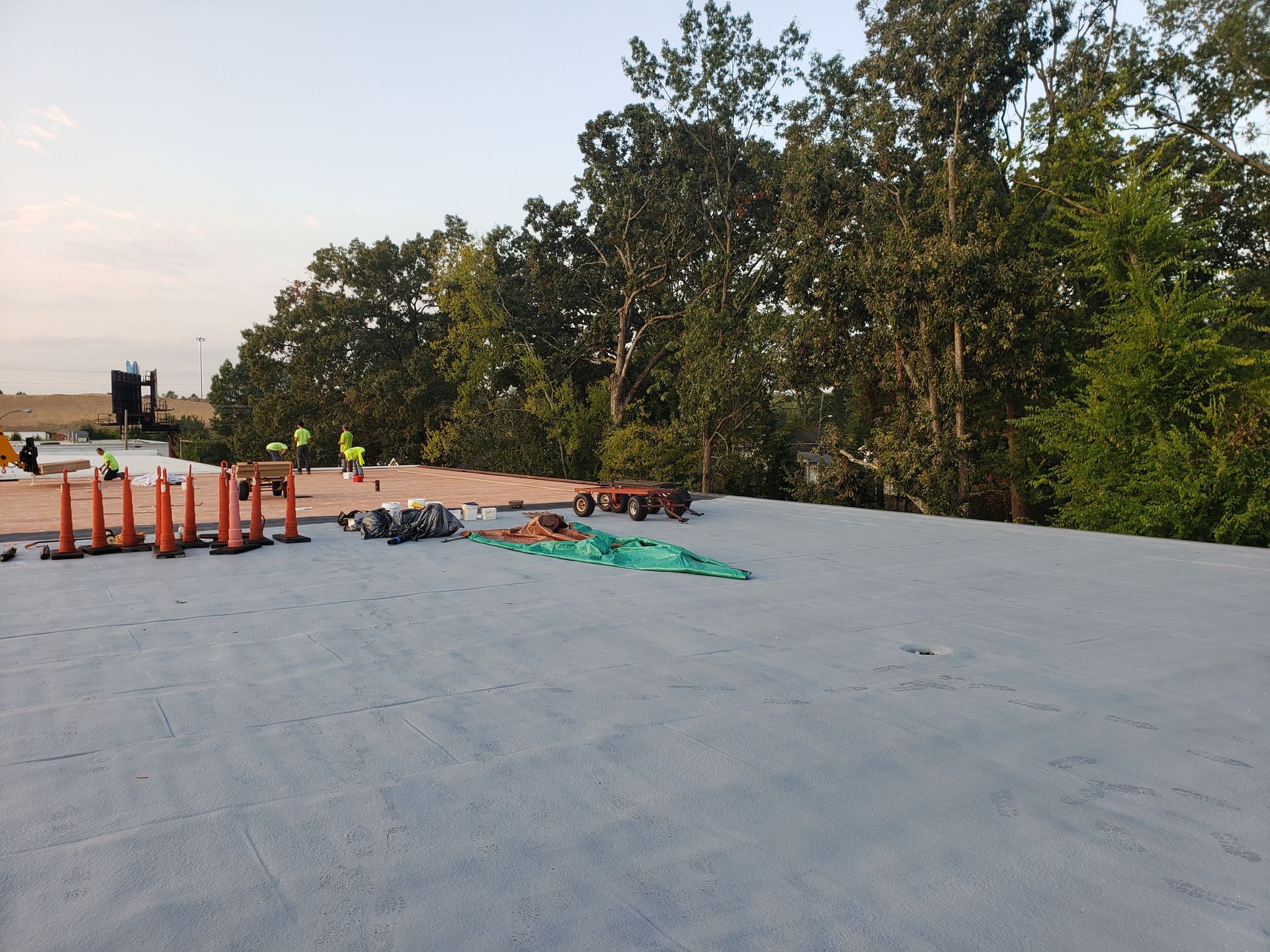
Roof coating or tear-off: what you are actually deciding between
When a commercial low-slope roof starts leaking, the default quote is a tear-off. Strip the existing membrane to the deck, haul it off, and build a new roof. It works, and sometimes it is the only honest answer. But it is the most expensive option on the table, it puts a dumpster in your lot for a week or more, and it leaves your building open to weather in the middle of it.
A roof coating or spray foam restoration does something different. Instead of removing the roof, you repair what is failing, then apply a new monolithic waterproof surface over the top of it. No demolition. No disposal fees. No exposed deck. In most cases the business underneath never stops operating, and crews work around your hours rather than the other way round.
The tradeoff is that restoration only works on a roof that is a candidate for it. If the insulation under the membrane is saturated, if the deck is rusted or rotted, or if the building already carries more roofing layers than code allows, coating over it just buries the problem. We core the roof and check moisture before we quote, and if the honest answer is tear-off, that is what we will tell you.
Silicone, acrylic and elastomeric coatings: which one your roof needs
“Roof coating” is not one product. The three families behave differently, and picking the wrong one for your building is how people end up recoating in five years instead of twenty.
Silicone. The workhorse for flat roofs in this region. Silicone is highly resistant to ponding water — it does not soften or re-emulsify when it sits wet, which is the failure mode that kills lesser coatings on roofs with drainage problems. It holds up to UV without chalking out, and it stays flexible through freeze-thaw cycling. It goes on in a single thick coat. The knock on silicone is that it holds dirt over time, so reflectivity drops somewhat from the day it was sprayed, and it is more expensive per square foot up front.
Acrylic. Water-based, highly reflective, and the most economical of the three. Acrylics are excellent on sloped metal roofs and on roofs that drain well, where the coating is not going to sit in standing water. They stay bright longer than silicone. But acrylic needs drainage — on a roof with real ponding it is the wrong specification, and it also needs a proper cure window with no rain, which matters when you are scheduling work in a Tennessee spring.
Elastomeric and urethane systems. Elastomeric is the broad category — a coating that stretches and recovers as the roof moves through its daily thermal cycle. Urethanes bring impact and traffic resistance, which is what you want on a roof with regular foot traffic to rooftop equipment, or where hail is a concern. They are often specified as a base coat under a silicone or acrylic topcoat rather than used alone.
What decides it: how your roof drains, what the existing membrane is made of, how much foot traffic the roof sees, what warranty term you want, and your budget. We walk the roof before specifying anything. Any contractor who quotes a coating without getting on your roof and testing for moisture is guessing.
Spray foam (SPF) roofing systems
A spray polyurethane foam roof is a different animal from a coating alone, and on the right building it is the strongest option we install.
Closed-cell polyurethane foam is sprayed as a liquid directly over the prepared existing roof. It expands and cures into a single continuous surface with no seams, no laps and no fasteners driven through it. Because it is sprayed rather than rolled out, it self-flashes around every curb, drain, pipe penetration, skylight and parapet on the roof — which is exactly where seamed membrane systems leak. It also adds real R-value, typically around R-6.5 per inch, so the roof becomes the best-insulated part of your building envelope rather than the weakest.
Then the foam gets a coating over it — usually silicone in our climate. The coating protects the foam from UV, which is the one thing polyurethane cannot tolerate on its own, and provides the reflective, waterproof wear surface.
The other thing foam does that nothing else does: it can be sloped during application. If your roof has been ponding water in the same three low spots for a decade, the foam can be built up in those areas to move water toward the drains. With a membrane, fixing that means adding tapered insulation underneath — a much bigger job.
Roof types we coat and restore
- TPO and PVC — single-ply membranes that have reached the end of their warranty, or where the seams and flashings have started to fail. Coating restores the surface without a tear-off.
- EPDM — the black rubber roofs on a lot of older commercial buildings around Chattanooga. These absorb enormous heat and typically fail at the seams and at penetrations first.
- Modified bitumen and built-up (BUR) — gravel and torch-down roofs. Usually good candidates for restoration when the underlying deck is sound.
- Metal roofs — standing seam and R-panel, where the leaks come from fastener penetrations and seam movement rather than from the panel itself.
- Existing spray foam roofs — a foam roof that has never been recoated is overdue. Recoating an existing SPF roof is a fraction of the cost of any other option on this list.
- Concrete and low-slope structural decks — including flat porch roofs, additions and dormers on residential buildings, which are a common leak source on houses here.
Metal roof restoration and coating
Metal roofs on shops, warehouses, barns and metal buildings fail in a predictable way. The panels themselves outlast everything, but the roof moves constantly with temperature, and that movement works the fasteners loose. Water gets in at the screw holes and at the seams. Once rust starts at a fastener, it spreads under the washer where you cannot see it.
A restoration system addresses the roof as a whole rather than chasing individual leaks. Fasteners are addressed, seams and penetrations are detailed with reinforcing fabric, rust is treated, and the entire roof gets a coating that ties it into one continuous surface. The result stops the leaking and stops the corrosion, and it does it without a crane, a tear-off, or interrupting whatever is happening under the roof.
On metal buildings there is a second problem coatings do not solve: condensation forming on the underside of the panel and dripping on whatever is stored below. That is an insulation problem, not a roofing problem, and it is handled from inside. See metal building insulation.
What roof coating and spray foam roofing cost
The variables that move the number: total roof square footage, what is already up there and what condition it is in, how much wet insulation has to come out, the number of penetrations and curbs, the coating system and mil thickness specified, the warranty term you want, and access — getting equipment onto a three-story roof is a different job from a single-story warehouse.
Broadly: a straightforward coating over a sound roof is the least expensive path, a full spray foam roof system costs more than that, and both are meaningfully less than a tear-off and replacement on the same building. The gap is largest on roofs with a lot of penetrations, because that is where tear-off labor concentrates.
How we handle it: we come out, core the roof to check for trapped moisture, look at the deck and the drainage, and give you a written price before we touch anything. The evaluation is free. Where a restoration is possible we will show you that number next to the tear-off number so you can see what you are actually choosing between.
Two things worth checking on your side. First, restoration work may be treated differently than a full replacement for tax purposes — worth a conversation with your accountant before you decide. Second, reflective roofing can qualify for utility rebates depending on the program and the building, and those are almost always applied for before the work rather than after.
Warranty and manufacturer systems
Coating warranties come in tiers, and the tier depends on the mil thickness applied and on the system being installed by a contractor the manufacturer has approved. A thicker application buys a longer term. This is the single easiest place for a low bid to hide — two quotes that both say “silicone coating” can be specifying very different amounts of material and very different warranties.
When you compare quotes, ask three questions: how many mils of coating, what warranty term that thickness carries, and whether the warranty comes from the manufacturer or only from the contractor. A contractor-only warranty is worth exactly as long as the contractor stays in business.
Ask us for our specific warranty terms on the system your roof calls for and we will put them in writing with the quote.
Roof coating and spray foam roofing FAQs
Can you coat over my existing roof instead of tearing it off?
Usually, yes — and that is the whole reason to consider it, because you skip demolition and disposal entirely and the building keeps operating. Whether it is possible depends on three things: whether the insulation under the membrane is dry, whether the deck is structurally sound, and how many roofing layers are already up there. We core the roof and take moisture readings before answering, and we will tell you if it needs to come off.
Silicone or acrylic — which coating is better?
Neither is better in the abstract; they fail under different conditions. Silicone handles ponding water and is the safer choice on a flat roof that drains poorly, which describes a lot of low-slope roofs in this area. Acrylic is more reflective, stays cleaner and costs less, and is a strong choice on sloped metal or on a roof that genuinely drains. If your roof holds water anywhere for more than 48 hours after a rain, silicone.
How long does a roof coating last?
The coating is a wear layer, not a permanent surface. Service life depends on the product, the mil thickness applied and the exposure, and the manufacturer warranty term is the best available proxy for it. A coated roof is renewable — when the surface wears, you recoat rather than replace, and the recoat costs a fraction of the original system. That is the central economic argument for restoration.
Does a spray foam roof leak at the seams?
There are no seams. The foam is applied as a liquid and cures into one continuous surface that self-flashes around drains, curbs, pipes and parapets. Seams, laps and fastener penetrations are where conventional low-slope roofs leak, and a sprayed system does not have them.
Will a coating fix ponding water on my roof?
A coating alone will not change the slope, so water will still pond — which is why coating specification matters so much on a roof that holds water. A spray foam system can fix it, because the foam is built up in the low areas during application to move water toward the drains.
Can you coat a metal roof?
Yes, and metal restoration is one of the strongest applications. Fasteners are addressed, seams and penetrations are reinforced, rust is treated, and the coating ties the roof into one continuous surface. It stops both the leaking and the corrosion, without a tear-off and without shutting down what is under the roof.
How much cooler does a reflective roof run?
A dark membrane can reach 150°F or more on a summer afternoon in Chattanooga. A reflective coated roof under the same sun typically runs 50 to 60°F cooler. How much of that reaches your power bill depends on your insulation and your HVAC — on a large-envelope, heavily cooled building it is significant; on a small, well-insulated one it is less. The bigger benefit for most buildings is that the roof stops thermally cycling as hard, which is what ages it.
How long does the work take and do we have to shut down?
Restoration work happens entirely from the roof, so in almost every case the business underneath keeps running. Timeline depends on square footage, how much repair the roof needs first, and the weather — coatings need a dry cure window. We give you a schedule with the quote, and we work around your hours where the operation requires it.
My roof is already spray foam and has never been recoated. What now?
Get it looked at soon. Foam itself does not wear out the way a membrane does, but the coating over it does, and once UV reaches bare foam it starts degrading. Caught in time, a recoat is the cheapest roofing work you will ever buy on that building. Left too long, the foam has to be repaired or removed first.
Commercial roof coating and spray foam roofing across Southeast Tennessee and North Georgia
We install roof coatings, metal roof restoration and spray foam roofing systems throughout the region, including Chattanooga, East Ridge, Red Bank, Hixson, Ooltewah, Cleveland, Athens, Dayton, Fort Oglethorpe, Ringgold, Dalton, Calhoun and Summerville. See all the areas we serve, or look at commercial insulation and metal building insulation.