
What a crawl space vapor barrier does — and what it doesn't
A vapor barrier is a liner laid over the dirt floor of your crawl space. Bare soil gives off moisture constantly, even when it looks dry, and that moisture climbs into your floor joists, your subfloor and eventually the air in your house. A good barrier stops it at the ground.
What a vapor barrier does not do on its own is stop the other big moisture source in a Chattanooga crawl space: humid outdoor air coming in through the foundation vents. In July, that air is often wetter than anything coming out of the ground. That's why a liner alone so often leaves homeowners with the same musty smell they started with.
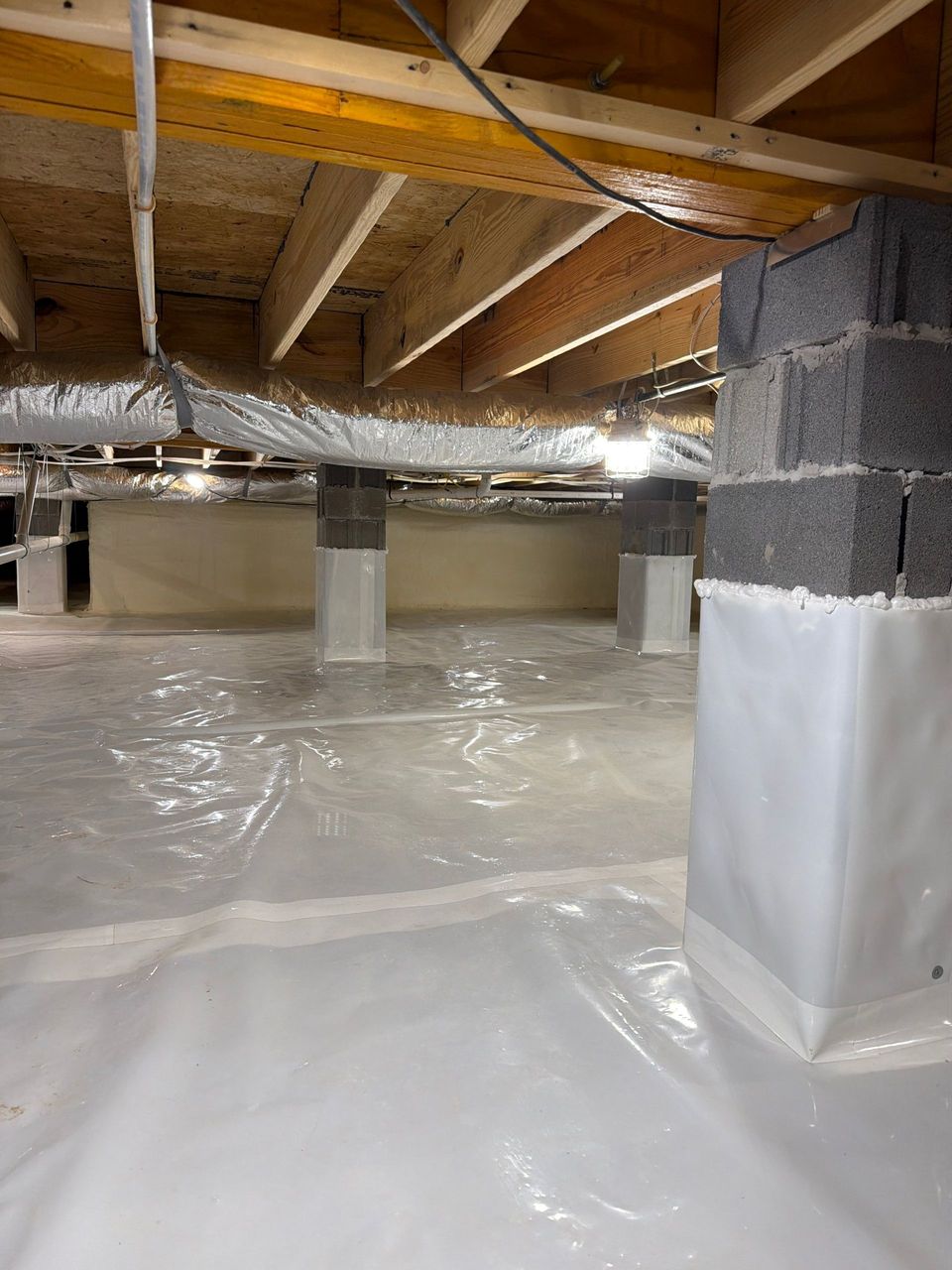
Vapor barrier or full encapsulation: which one do you need?
- Vapor barrier: a liner on the ground. It handles moisture from the soil and leaves the vents open and the walls bare.
- Full encapsulation: the liner, plus sealed vents and openings, plus closed-cell spray foam on the foundation walls and rim joists. The crawl space becomes a sealed part of the house, and there is nothing left for a dehumidifier to chase.
In this climate, most of the crawl spaces we get under need the whole system. We will show you why at the evaluation, in your own crawl space, with a moisture meter. See how we encapsulate a crawl space in Chattanooga →
Why the plastic in your crawl space isn't working
If your house already has plastic on the ground and still smells musty, you are not alone. Most of the liners we pull out have the same problems:
- Thin 6 mil construction poly that tore the first time a plumber or HVAC tech crawled across it.
- Sheets laid loose with gaps between them, so ground moisture comes straight up through the seams.
- Plastic that stops short of the foundation wall instead of running up it and being sealed.
- Piers left bare, with the liner cut around them.
- Water sitting on top of the plastic, or condensation trapped underneath it.
- Vents still wide open, pulling humid outdoor air in all summer.
Quick check: pull back a corner of the plastic. If the dirt underneath is dark and damp or the underside is beaded with water, the liner is not sealed and the ground moisture is going around it.
What a properly installed crawl space vapor barrier looks like
- The old material comes out. Torn plastic, debris and the wet fiberglass batts that have fallen out of the joists are removed so the new liner goes down on clean, graded dirt. More on insulation removal.
- A heavy reinforced liner. We use reinforced polyethylene in the 15–20 mil range — not 6 mil construction plastic. It holds up to foot traffic and service visits for the life of the house.
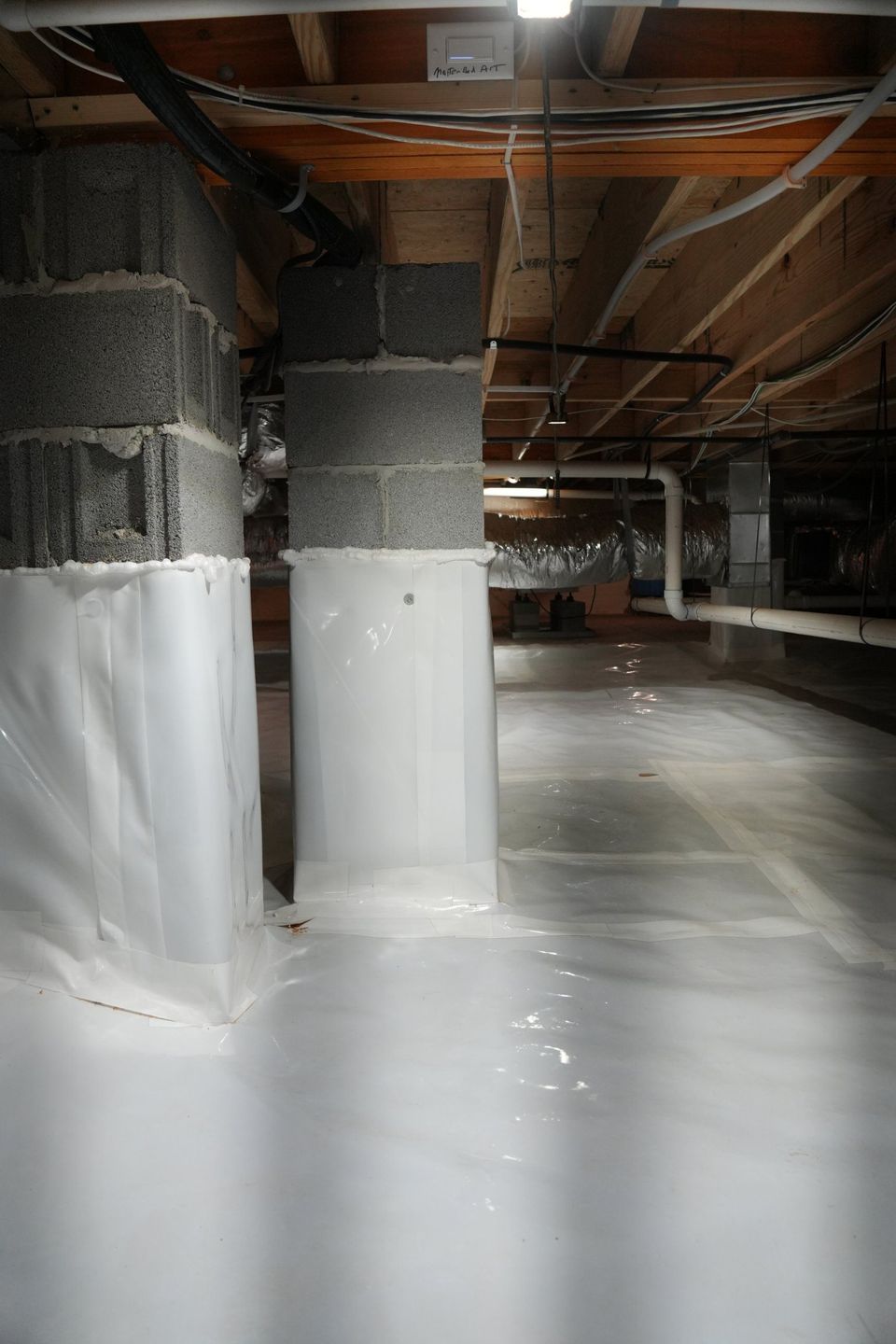
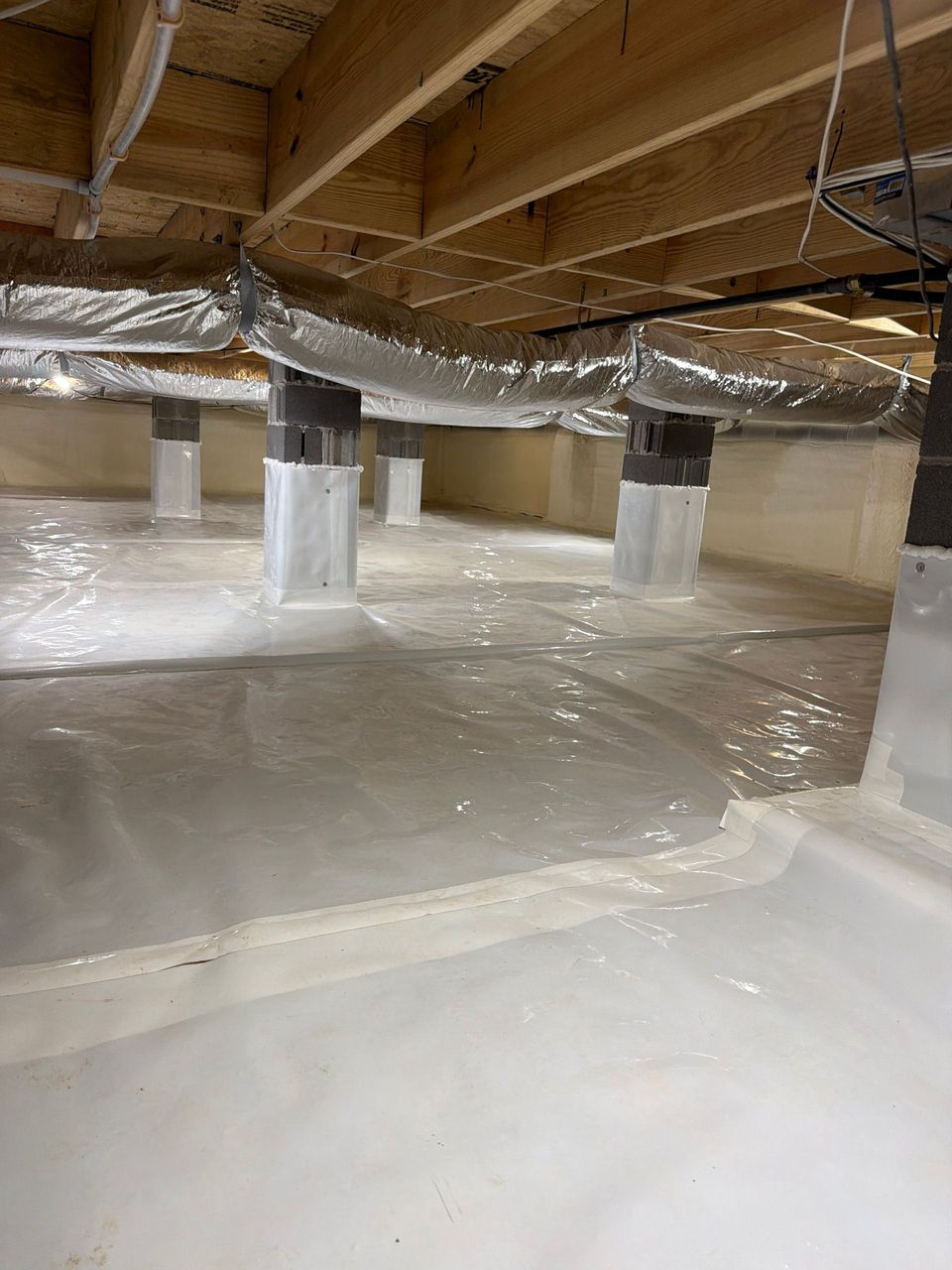
- Seams overlapped and taped. Every seam is overlapped and sealed so the liner acts as one continuous sheet, not a patchwork.
- Piers wrapped. Each pier is wrapped and sealed instead of being cut around.
- Edges sealed at the wall. The liner turns up the foundation wall and ties into closed-cell spray foam on the walls, so there is no gap at the base of the wall for moisture to get around.
- Vents and openings closed. Foundation vents, the access door and the plumbing, wiring and duct penetrations are sealed so humid outside air stops coming in.
Vapor barrier thickness: what the mil numbers mean
Mil is thousandths of an inch. 6 mil is ordinary construction plastic — cheap, easy to find, and easy to tear. 10–12 mil liners are tougher but still puncture where someone kneels on a rock. 15–20 mil reinforced liners have a woven scrim inside that keeps a puncture from turning into a tear, and that is what we install. Thickness matters, but sealing matters more: a 20 mil liner laid loose with open seams will not outperform a well-sealed thinner one.
Does a vapor barrier stop water?
No, and anyone who tells you it does is setting you up for a problem. A vapor barrier handles moisture coming out of the soil as vapor. If you get standing water or soft mud in the crawl space after a heavy rain, that is liquid water, and it is a drainage question — grading, gutters, downspouts or interior drains. That is not work we do. We will tell you if that is what you have, and once the space is dry and staying dry, we can do our part.
What does a crawl space vapor barrier cost in Chattanooga?
It depends on the square footage, how many piers there are, how much old material has to come out, how much wall there is to seal, and whether the whole space should be encapsulated. A price off a website would be a guess. We give you an exact written price after a free on-site evaluation, with every line of the scope spelled out.
Who does the work
Foametix is veteran-owned and has been insulating and sealing homes around Chattanooga for 17+ years. Every job is done by our own crews, never subcontractors. We are based at 2320 Gifford Street in Chattanooga and work about 100 miles out across Southeast Tennessee, North Georgia and North Alabama — see the towns we cover.
Crawl space vapor barrier questions
Do I really need a vapor barrier in my crawl space?
If your crawl space has a dirt floor, yes. Bare soil gives off moisture all the time, even when it looks dry, and that moisture ends up in your floor framing and in the air of your house. A properly sealed liner stops it at the ground.
What thickness vapor barrier should I use in a crawl space?
The 6 mil plastic sold as construction poly is the bare minimum and it tears the first time someone crawls across it. We use a reinforced polyethylene liner in the 15–20 mil range, which holds up to foot traffic, service visits and rodents.
Should the vapor barrier go up the foundation walls?
The liner should turn up the wall and be sealed, not stop at the edge of the dirt. On our jobs the walls also get closed-cell spray foam, and the liner ties into that foam so there is no gap at the base of the wall.
Can you put a vapor barrier over standing water?
No. A liner over active water traps it against your framing and hides it from you. Standing or running water is a drainage problem that has to be fixed first by the right trade. We do vapor and moisture control, not drainage, and we will tell you plainly if that is what you are dealing with.
Do I still need a dehumidifier with a vapor barrier?
With a liner alone and the vents still open, you are still pulling humid outdoor air into the crawl space, which is why so many companies pair a liner with a dehumidifier. When we fully encapsulate — liner, sealed vents and closed-cell foam on the walls and rim joists — there is no moisture getting in for a machine to remove.
Will a new vapor barrier get rid of the musty smell?
It removes one source of it. The smell usually comes from damp framing and humid air, so if the vents stay open the smell often lingers. Sealing the whole space is what makes it go away for good.
Can I install a crawl space vapor barrier myself?
You can buy the material at the big box stores, and the material is not the hard part. The sealing is: overlapped and taped seams, wrapped piers, edges sealed to the wall, and every vent and penetration closed. Most of the failed liners we pull out were laid loose and never sealed.
Find out what your crawl space actually needs. Free on-site evaluation, written price before we touch anything.
Call 423-710-2529 Request an evaluationRelated: crawl space encapsulation · why a dehumidifier won't fix a musty crawl space · is encapsulation worth it? · attic spray foam