Why your attic is the most expensive square footage in your Chattanooga home
If your power bill climbs every August and your upstairs bedrooms feel like a sauna by 3 p.m., the problem is almost never your HVAC. It's the empty, half-insulated space above your ceiling. In Chattanooga's climate, the attic is where most of a home's energy loss happens — and where the fastest return on an insulation upgrade lives.
At Foametix, we've insulated attics across Chattanooga, Hixson, Red Bank, East Ridge, Ooltewah, Signal Mountain, Soddy-Daisy, Cleveland, Ringgold, and Dalton for more than 15 years. This guide is the same walk-through we give homeowners who call us for an estimate — what to look for, what materials make sense here, what it costs, and when to upgrade.
Why Chattanooga attics behave differently than attics in other states
Chattanooga sits in IECC Climate Zone 4 — a mixed-humid zone with long, sticky summers, a handful of hard freezes each winter, and shoulder seasons that swing 30 degrees in a single day. That creates three attic problems at once:
- Radiant roof heat. On a July afternoon in the valley, a dark shingle roof can hit 150°F. That heat radiates straight down onto the attic floor, and from there into the rooms below.
- Humidity and condensation. Warm, moist Tennessee air meets cool air-conditioned ceiling drywall and the result is hidden moisture. Over time that rots rafters, stains ceilings, and feeds mold on old fiberglass.
- Air leakage, not just heat transfer. Most Chattanooga homes built before 2010 have unsealed top plates, recessed lights, and attic hatches. The "stack effect" pulls conditioned air out of your living space and pulls humid outdoor air in.
Traditional fiberglass batts slow heat transfer, but they do nothing for air leakage or humidity. That's the single biggest reason homeowners in our service area keep calling about high bills even after adding more blown-in insulation a year or two ago.
How much attic insulation do Chattanooga homes actually need?
Department of Energy guidance for Climate Zone 4 (which covers Hamilton County and most of the Tennessee Valley) calls for an attic R-value of R-38 to R-60. Most Chattanooga homes we open up measure somewhere between R-11 and R-19 — less than half of code-minimum. That gap is where your utility bill is going.
Here's what those R-values look like in actual inches of material in an attic:
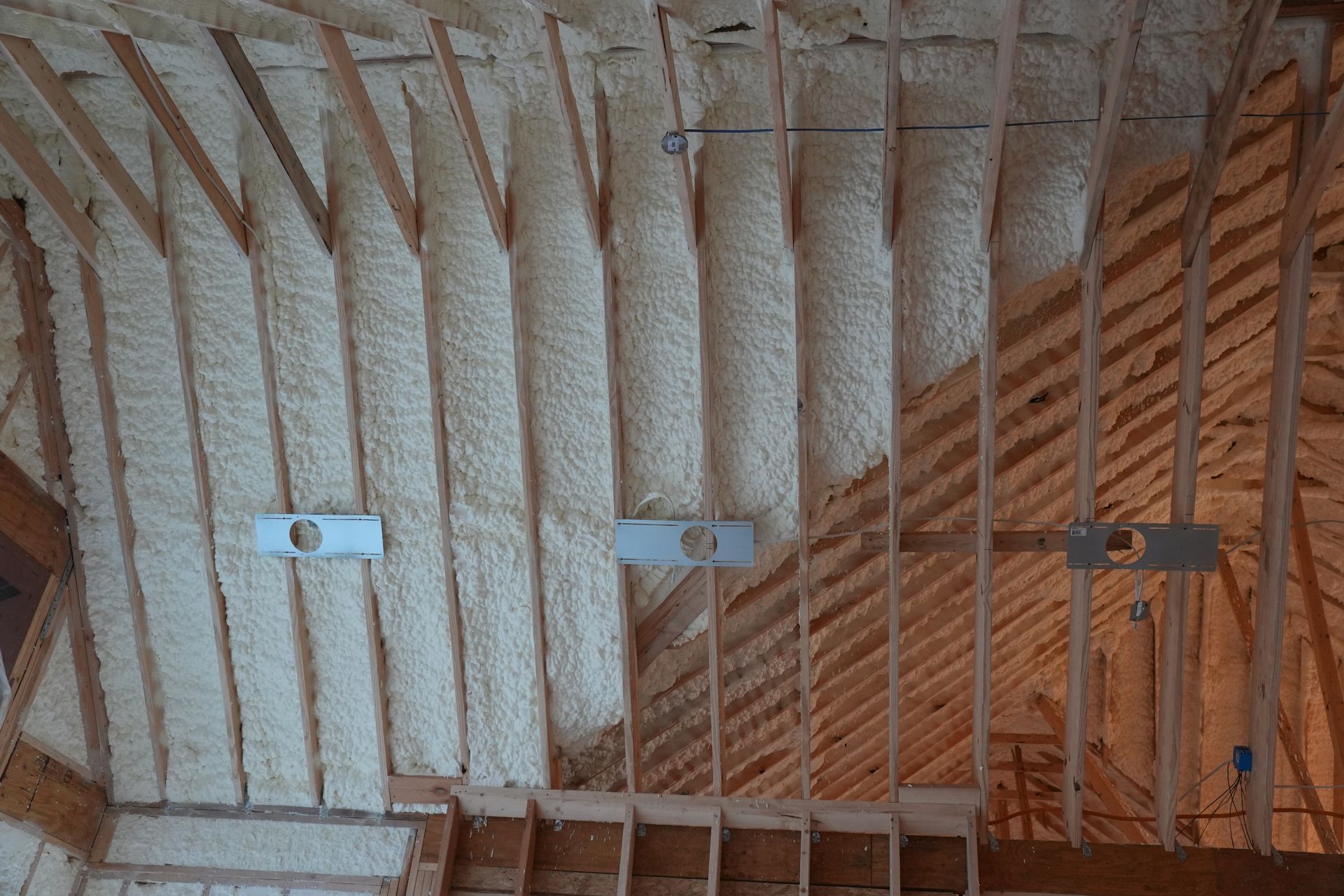
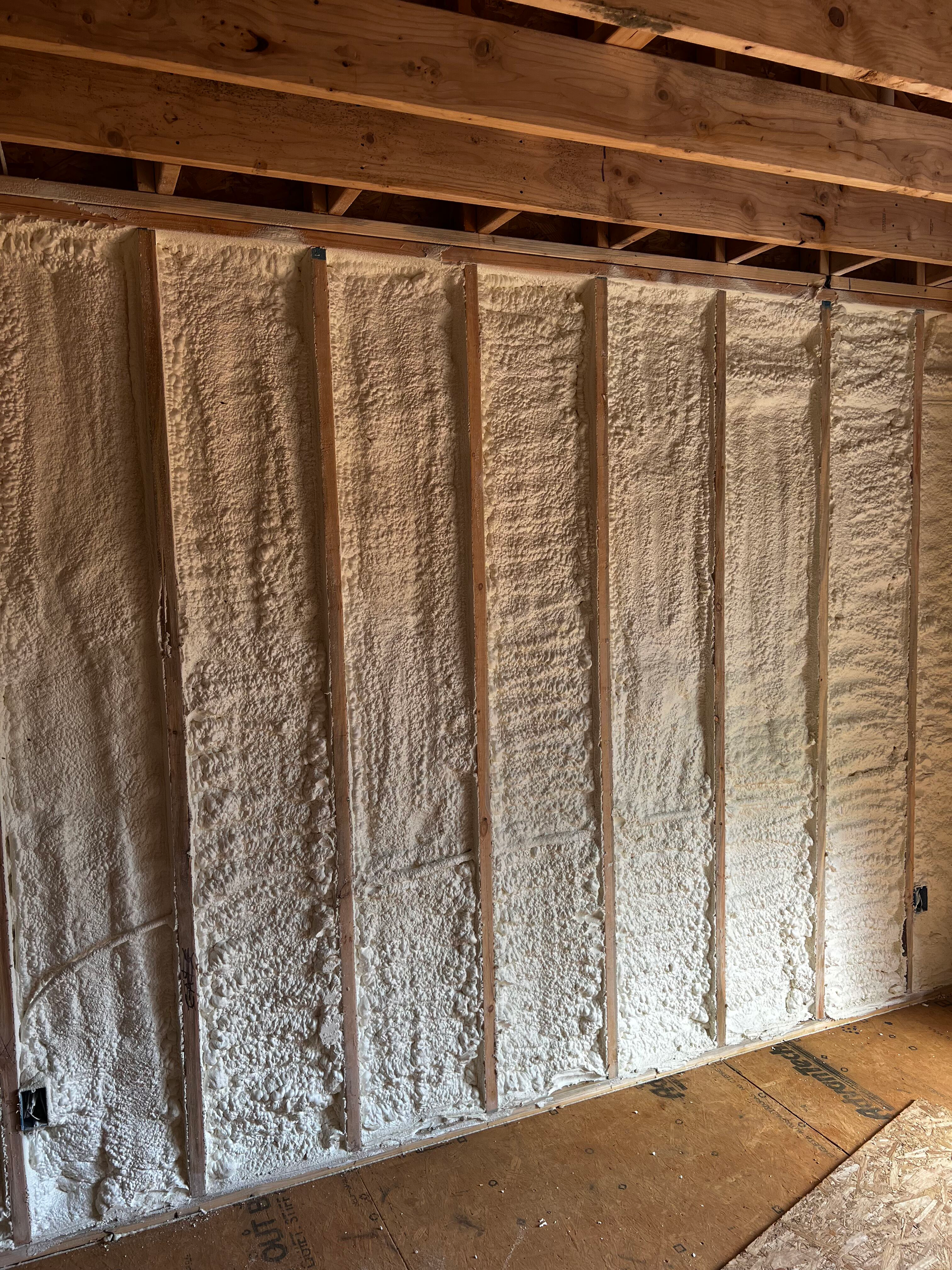
- Open-cell spray foam: about R-3.5 per inch. A typical roof-deck install in Chattanooga runs 5.5–7 inches thick.
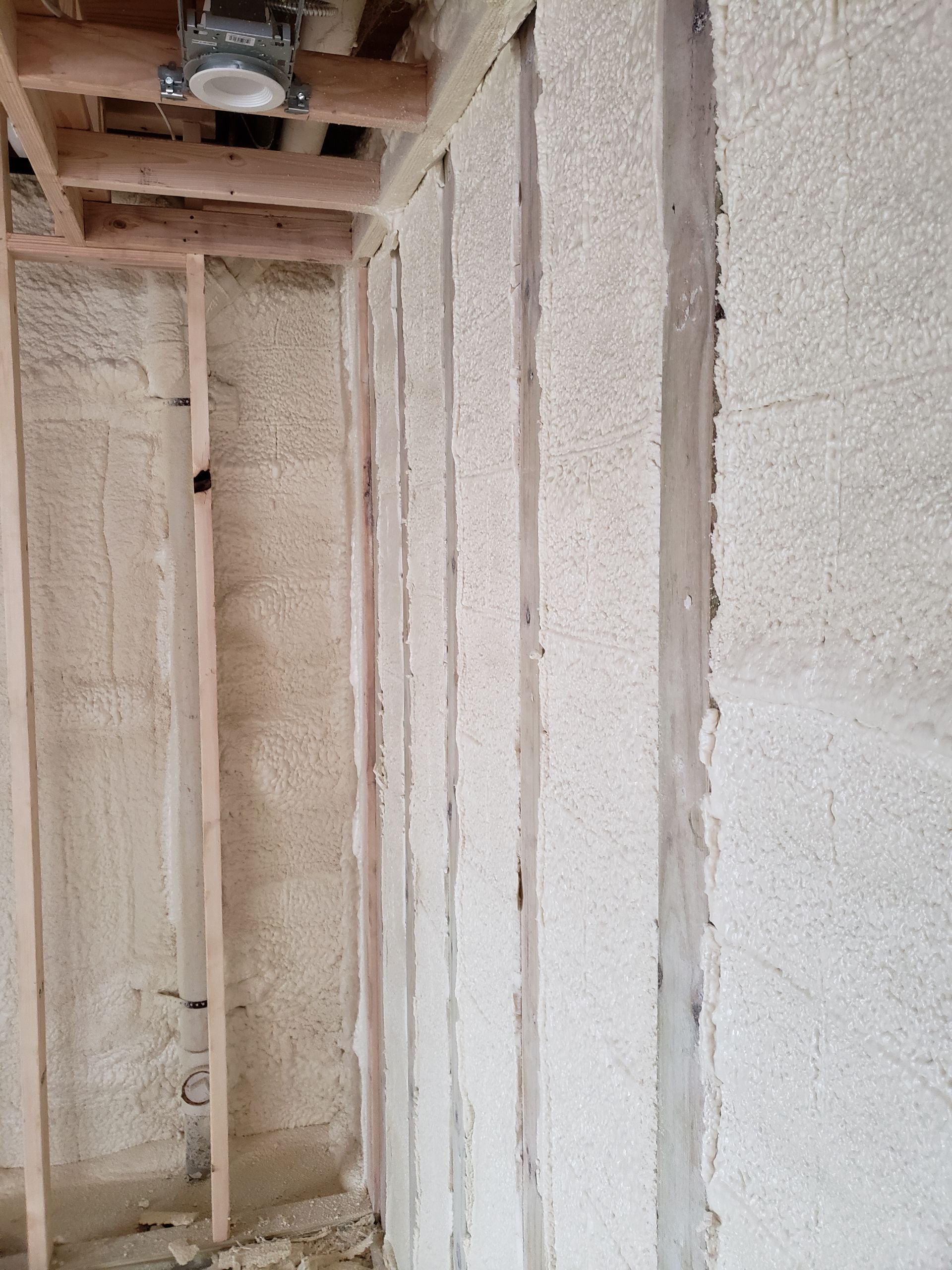
- Closed-cell spray foam: about R-7 per inch. Often applied 2–3 inches where you need an air and moisture barrier in a tight space.
- Blown-in cellulose: about R-3.2 per inch. Needs 12–17 inches to hit R-38 and settles over time.
- Fiberglass batts: about R-3.1 per inch. Rarely hits advertised R-value in practice because of gaps and compression.
Open-cell vs. closed-cell spray foam in a Tennessee attic
This is the question we get on almost every Chattanooga quote. Both work — they solve different problems.
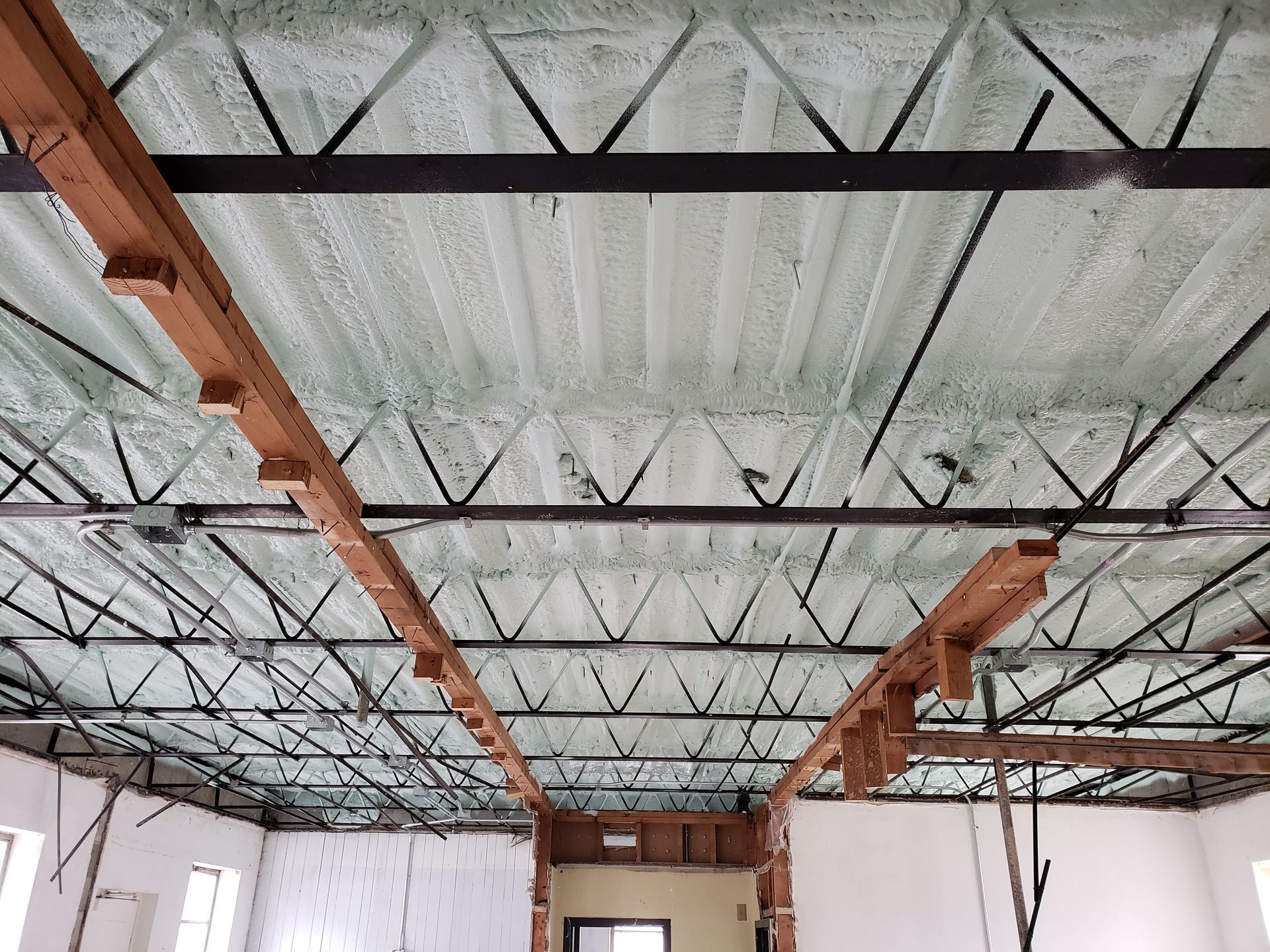
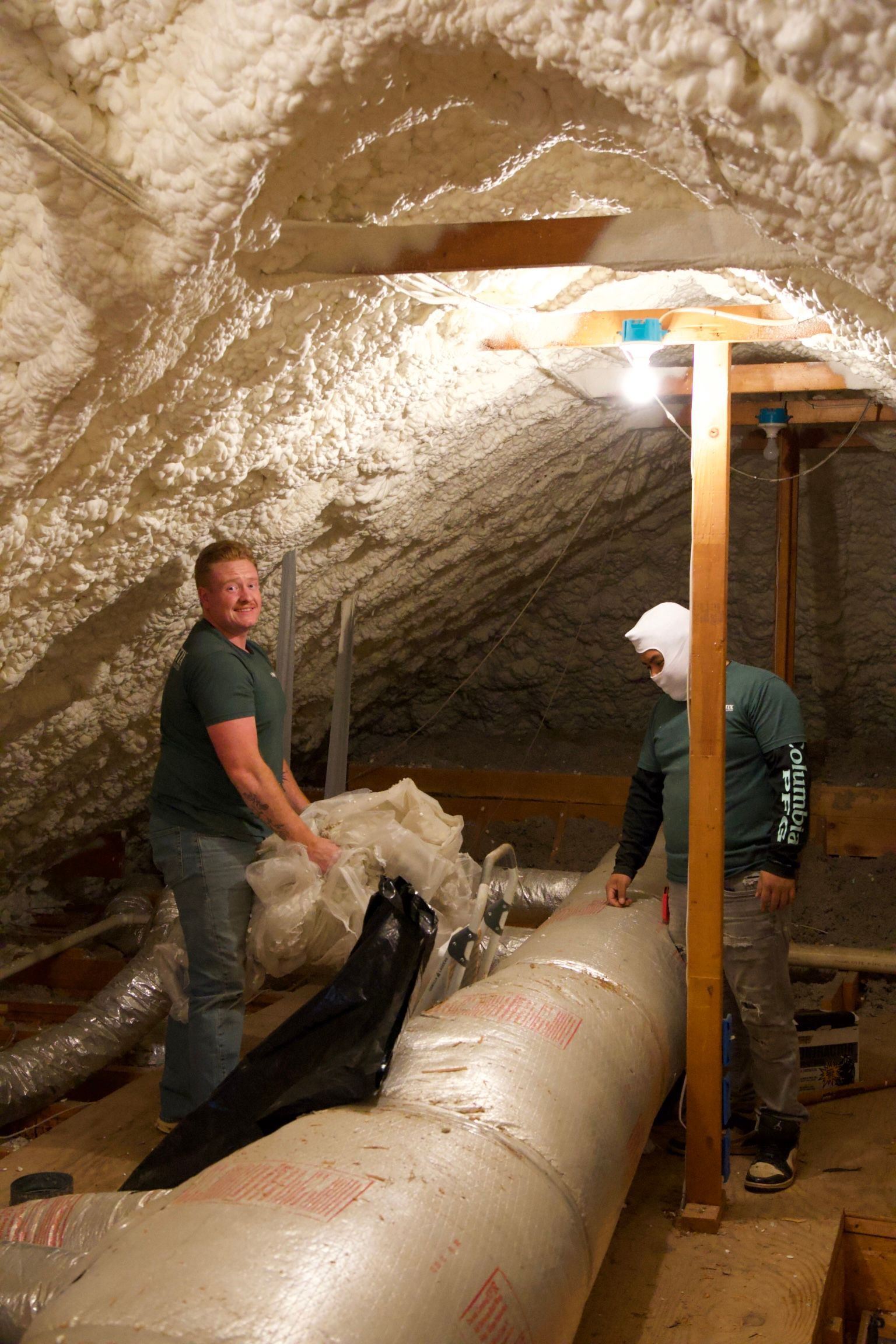
Open-cell spray foam is the workhorse for most attic conversions in our area. It's lighter, expands to fill every cavity, and dramatically cuts air leakage at roughly half the cost of closed-cell. It's the right call for most unvented attic assemblies on typical residential roofs.
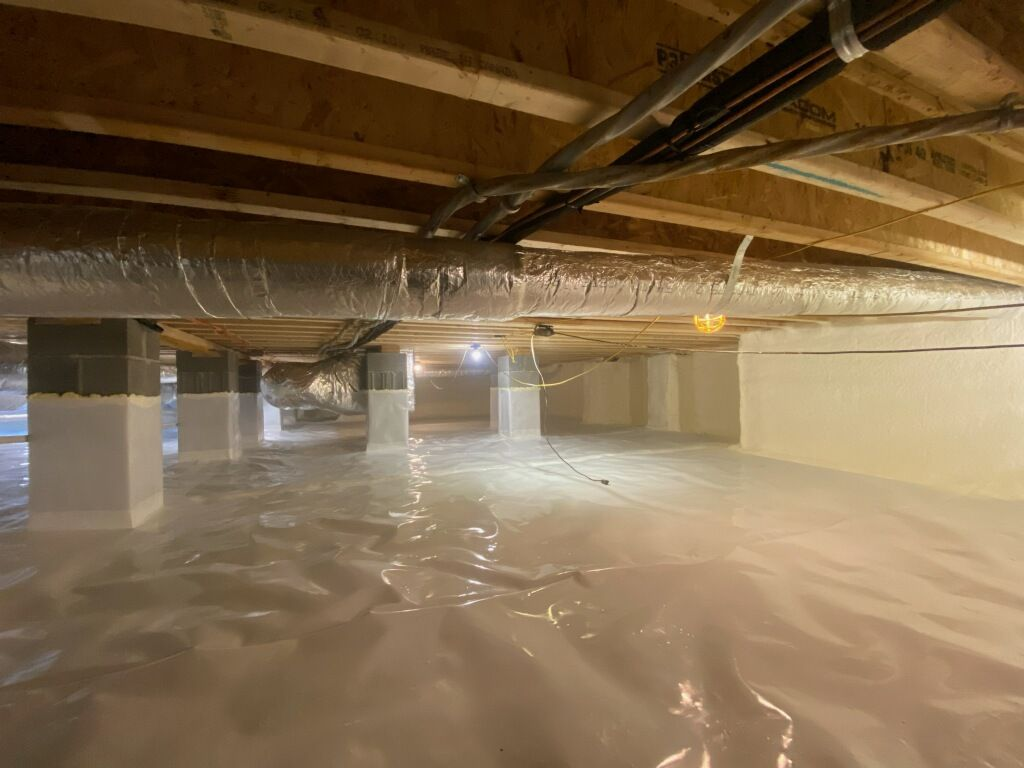
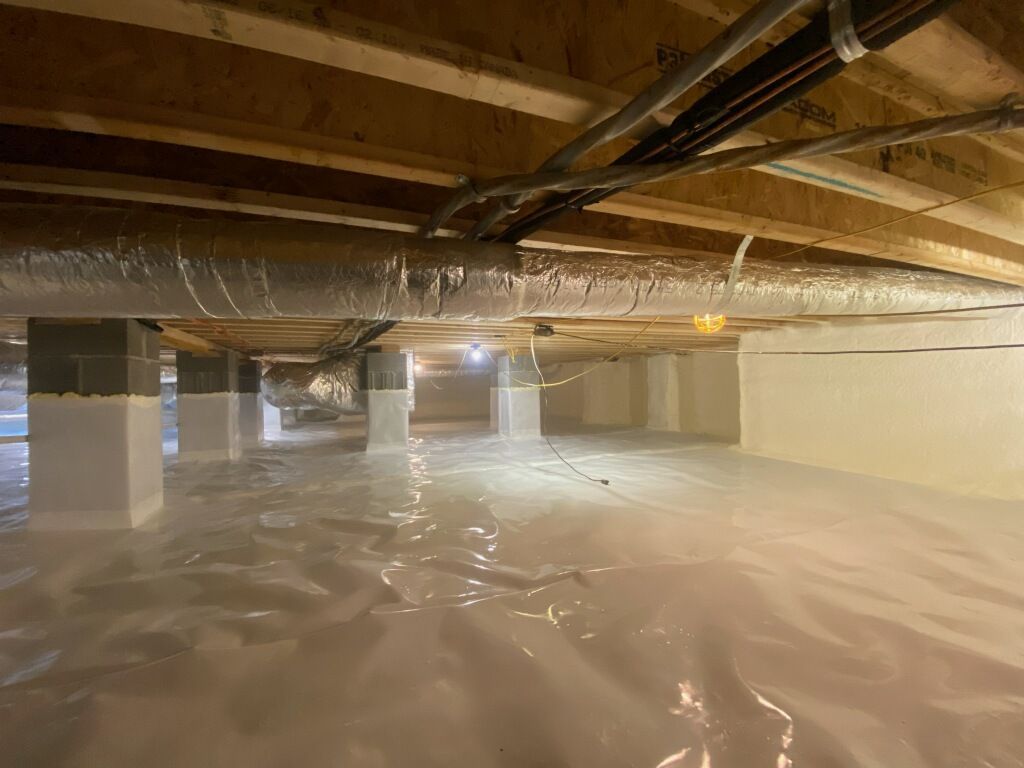
Closed-cell spray foam is denser, adds structural rigidity, and acts as its own vapor barrier — a real advantage in Chattanooga's humidity. We use it for crawl spaces, metal buildings, and attics with flood, wind, or moisture concerns, including homes close to the Tennessee River.
A quick rule of thumb: if the attic is a standard pitched roof on a residential home in Hixson, Red Bank, or East Brainerd, open-cell on the roof deck almost always wins on value. If it's a metal building, a flat roof, or an attic with a recurring moisture problem, we typically recommend closed-cell.
Seven signs your Chattanooga attic insulation is failing
- Your EPB or electric co-op bill jumped more than 15% year-over-year with no change in habits.
- Upstairs rooms are 5–10 degrees warmer than downstairs in summer (or colder in winter).
- Your HVAC runs constantly and still can't hold the setpoint on hot afternoons.
- You can feel drafts around recessed lights, ceiling fans, or the attic hatch.
- There's visible fiberglass dust on your HVAC returns or settled in corners of upstairs rooms.
- You see ice dams at the eaves after an occasional snow, or dark streaks on shingles.
- Your insulation is older than the house's last roof — or you can see the tops of the ceiling joists.
If two or more of these describe your home, the attic is the first place we'd look, not the HVAC.
What does attic insulation cost in Chattanooga right now?
Most Chattanooga attic projects fall into one of three price bands. These are the ranges we see on real estimates across Hamilton, Bradley, Marion, and Catoosa counties in 2026:
- Blown-in top-up (add fiberglass or cellulose to an existing attic): roughly $1,800 to $3,800 for a typical 2,000–2,500 sq ft attic.
- Full insulation removal plus new blown-in: roughly $3,500 to $6,500 depending on what's being removed (rodent-contaminated, wet, or knob-and-tube homes cost more).
- Open-cell spray foam on the roof deck (unvented attic assembly): roughly $5,500 to $12,000 for most Chattanooga single-family homes.
Spray foam is more upfront than blown-in, but in our climate it typically pays back through lower utility bills in 4–8 years, and it keeps paying back for the life of the roof. The TVA EnergyRight program and some local utilities also offer rebates on qualifying insulation upgrades — we help homeowners identify those during the quote.
What the Foametix attic insulation process actually looks like
- Free on-site inspection. We measure R-value, photograph the attic, and check for air leaks, moisture, and rodent activity. Most inspections take 30–45 minutes.
- Written estimate the same week. Fixed price, not hourly — you see exactly what material, thickness, and R-value we're installing.
- Prep and removal (if needed). Old, contaminated, or settled insulation is vacuumed out and hauled away.
- Air sealing. We seal top plates, can lights, plumbing penetrations, and the attic hatch before any new insulation goes in.
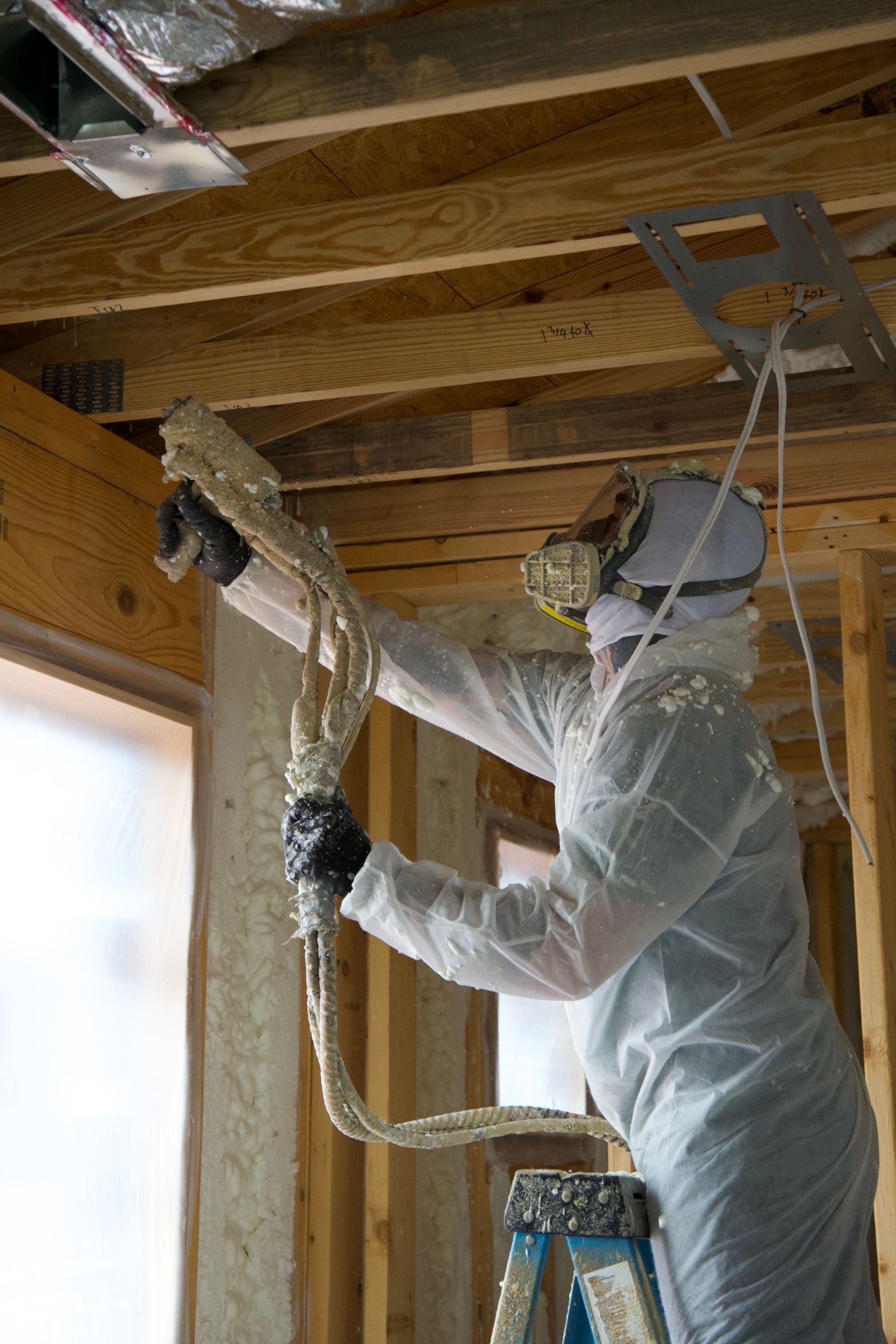
- Installation. Most single-family homes in Chattanooga are completed in one day.
- Walk-through. We show you before/after photos and R-value documentation on the spot.
Chattanooga attic insulation FAQ
Is spray foam safe in an attic? Yes. Once cured — usually within 24 hours — modern spray foam is inert and non-toxic. We use low-VOC formulations and ventilate the home during installation.
Do I need to remove my old fiberglass first? Not always. If the existing insulation is dry, rodent-free, and the air-seal underneath it is intact, we can add on top. If any of those are compromised — which is the case for most Chattanooga homes built before the early 2000s — removal is the better investment.
Will spray foam void my roof warranty? Properly applied open-cell spray foam on the underside of the roof deck does not void manufacturer warranties from the major shingle brands (GAF, Owens Corning, CertainTeed). We document the assembly for your records.
How fast will I see a difference on my power bill? Most Chattanooga homeowners see a noticeable drop on the very next billing cycle. The bigger wins show up over a full summer and winter — most of our customers report 20–40% lower heating and cooling bills after a full attic retrofit.
Do you service my area? We insulate attics within 100 miles of Chattanooga. That includes all of Hamilton County plus Cleveland, Dayton, Athens, Dalton, Ringgold, Fort Oglethorpe, Jasper, South Pittsburg, Dunlap, and North Georgia up through Calhoun and Rome.
Get a free Chattanooga attic insulation quote
Foametix is a locally and veteran-owned insulation contractor based at 2320 Gifford Street in Chattanooga, TN. We've been doing this in the Tennessee Valley for more than 15 years, and attic work is the majority of what we do.
Call us at 423-710-2529 or request a free attic inspection at foametix.com/contact. We'll tell you what you actually need — and what you don't.