You walk into the shop on an August morning and there is water on the floor. You go up on the roof looking for the hole. There isn't one.
That's condensation, and in a metal building in Southeast Tennessee it is close to inevitable if nothing is stopping it. The good news is that it's a solved problem.
What's actually happening
Air holds water, and how much it can hold depends on how warm it is. When warm, humid air touches a surface colder than its dew point, the air lets that moisture go. That's the water on the outside of your glass in July, and it's the water on the underside of your roof panel.
A steel panel is the ideal condensing surface. It's thin, it conducts heat fast, and overnight it sheds that heat to the sky. An hour before sunrise a panel can easily be ten or fifteen degrees colder than the air inside the building. When warm humid air moves in behind it, every square foot of that ceiling starts making water.
Why it's worse here than most places
Chattanooga gives this problem everything it wants. Summer dew points sit in the low 70s for weeks at a stretch. We get big overnight temperature swings in spring and fall, which is exactly what drops a panel below the dew point of the air already inside. And plenty of metal buildings here sit on a slab poured over damp ground, quietly feeding moisture into the air all day.
You don't need a humid day. You need a cold panel. Around here you get both.
What it costs you
Condensation is slow damage, which is why it goes unaddressed until it's expensive. It rusts the panel from the inside, on the face nobody inspects. It rots wood framing and purlins that get wet and never fully dry. It ruins whatever you store underneath, whether that's tools, equipment, feed, hay, inventory or electronics. It grows mold where wet insulation sits against framing. And it puts water on a concrete floor people walk across, which is a real injury risk in a working shop.
Where the standard blanket insulation falls short
Most metal buildings come with vinyl-faced fiberglass blanket rolled between the panel and the purlins. It's inexpensive, it's fast to install, and it's the industry standard. It also has a weakness worth understanding before you decide what to do with your building.
The blanket can sag over time, and the moment it pulls away from the panel you have an air gap, which is a pocket of humid air sitting against cold steel. The condensing surface has moved rather than gone away. The vinyl facing is doing the vapor control, and it only does that job while it stays continuous. Screws, seams and install tears are all openings. Once moisture gets past the facing it reaches the panel, condenses, and can soak the fiberglass from behind where nobody sees it. Damp fiberglass loses most of its R-value, the panel runs colder, and the cycle reinforces itself.
That's not a knock on anyone's workmanship. It's the nature of a system that relies on a continuous facing staying perfect for decades.
Why spray foam fixes it
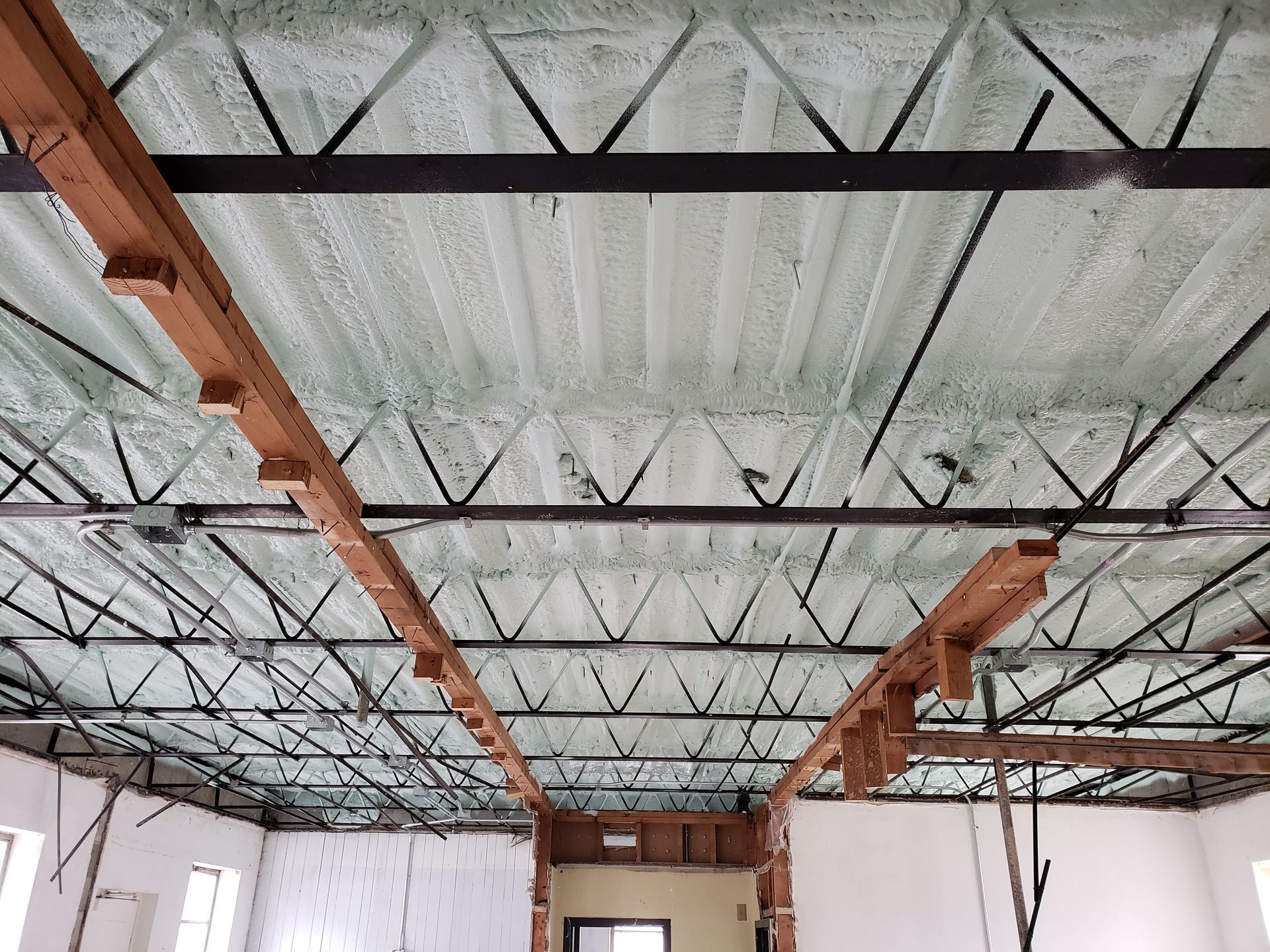
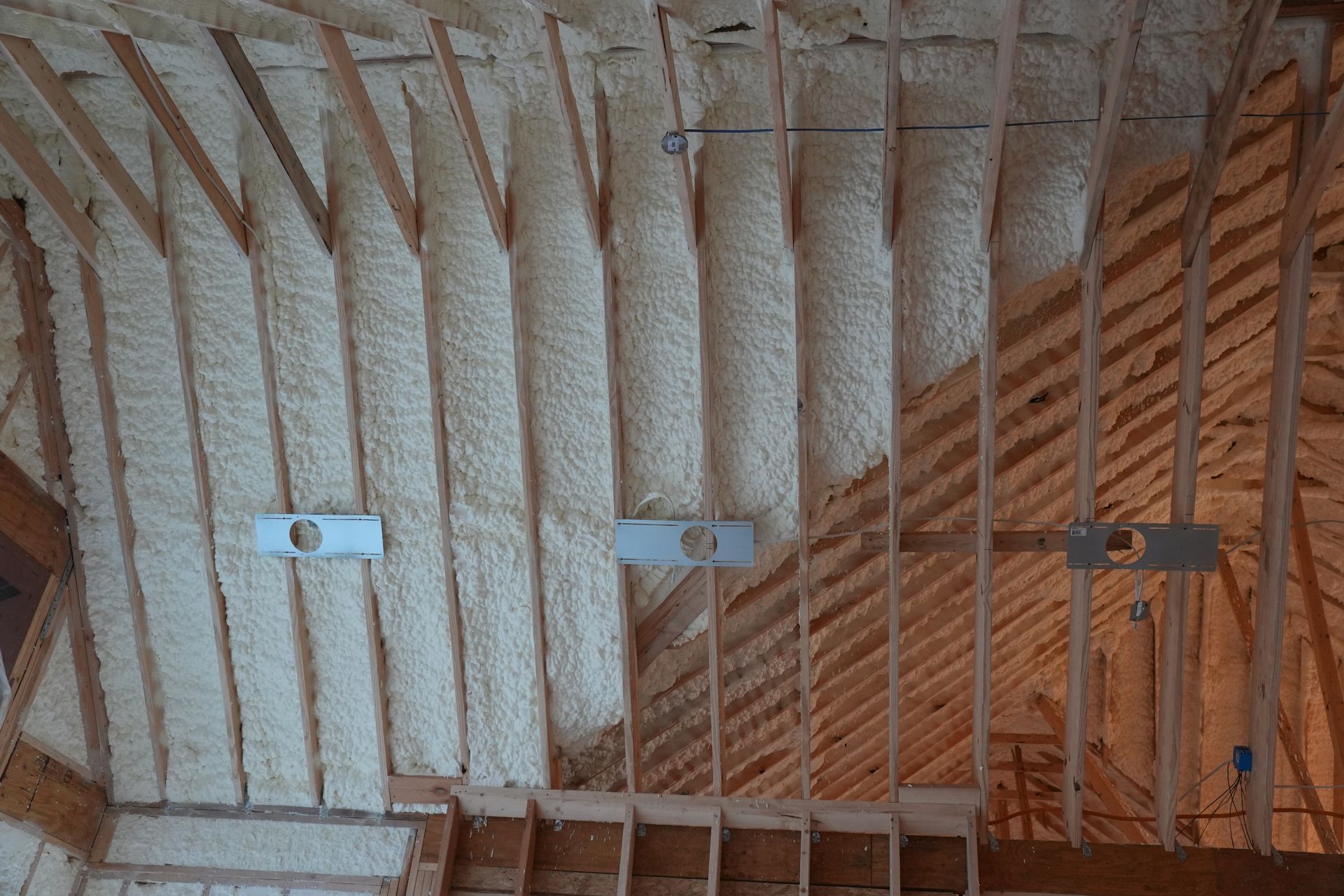
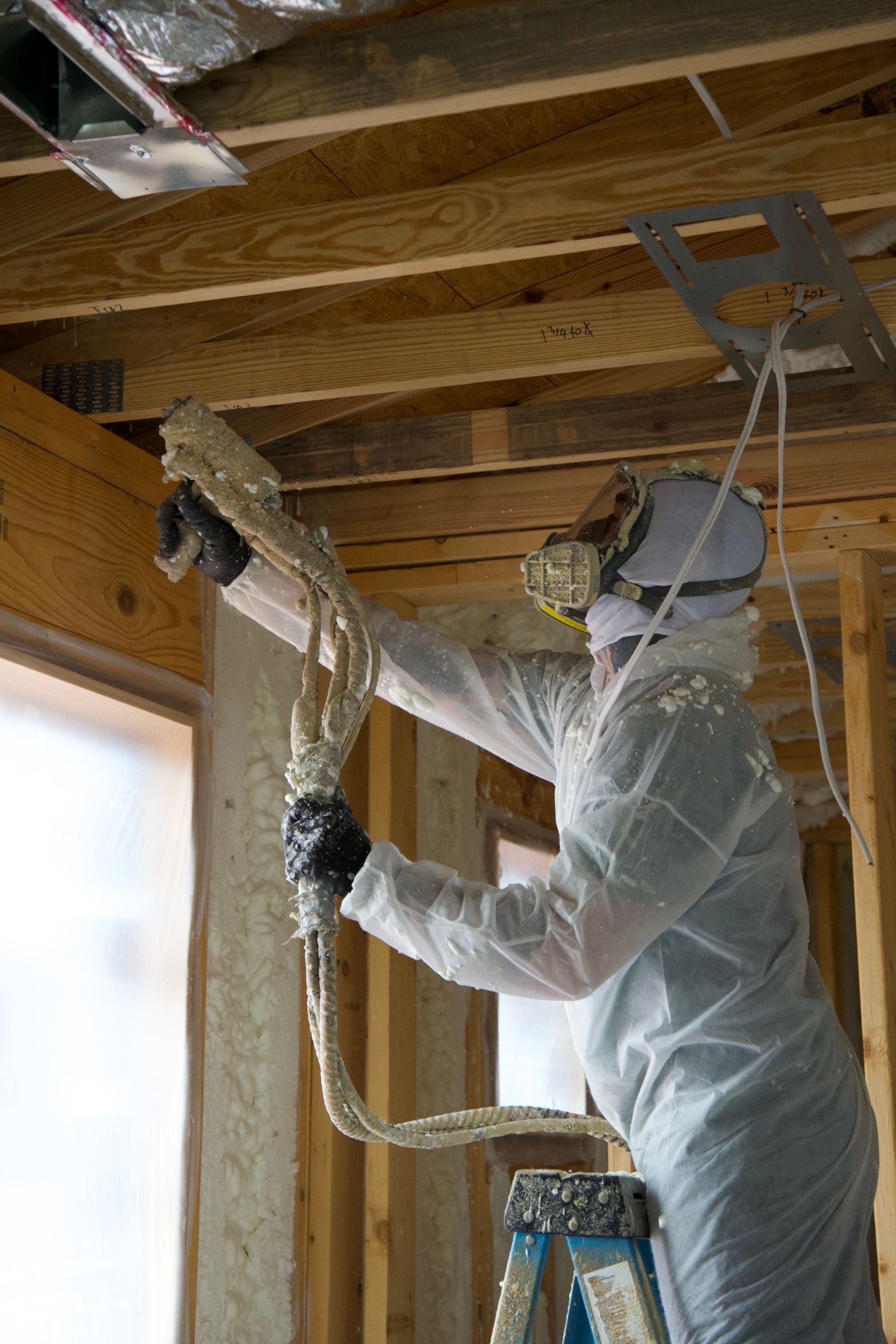
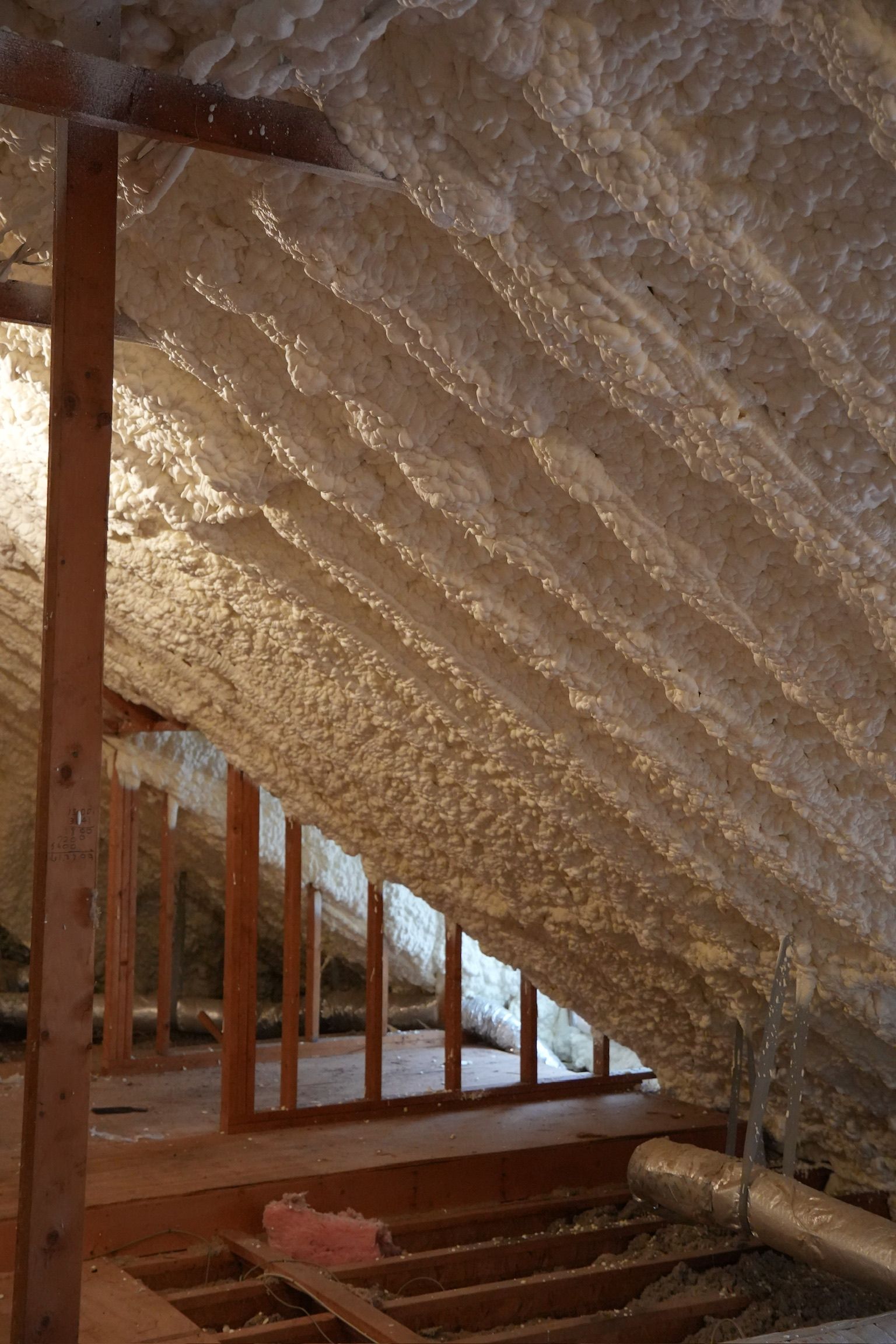
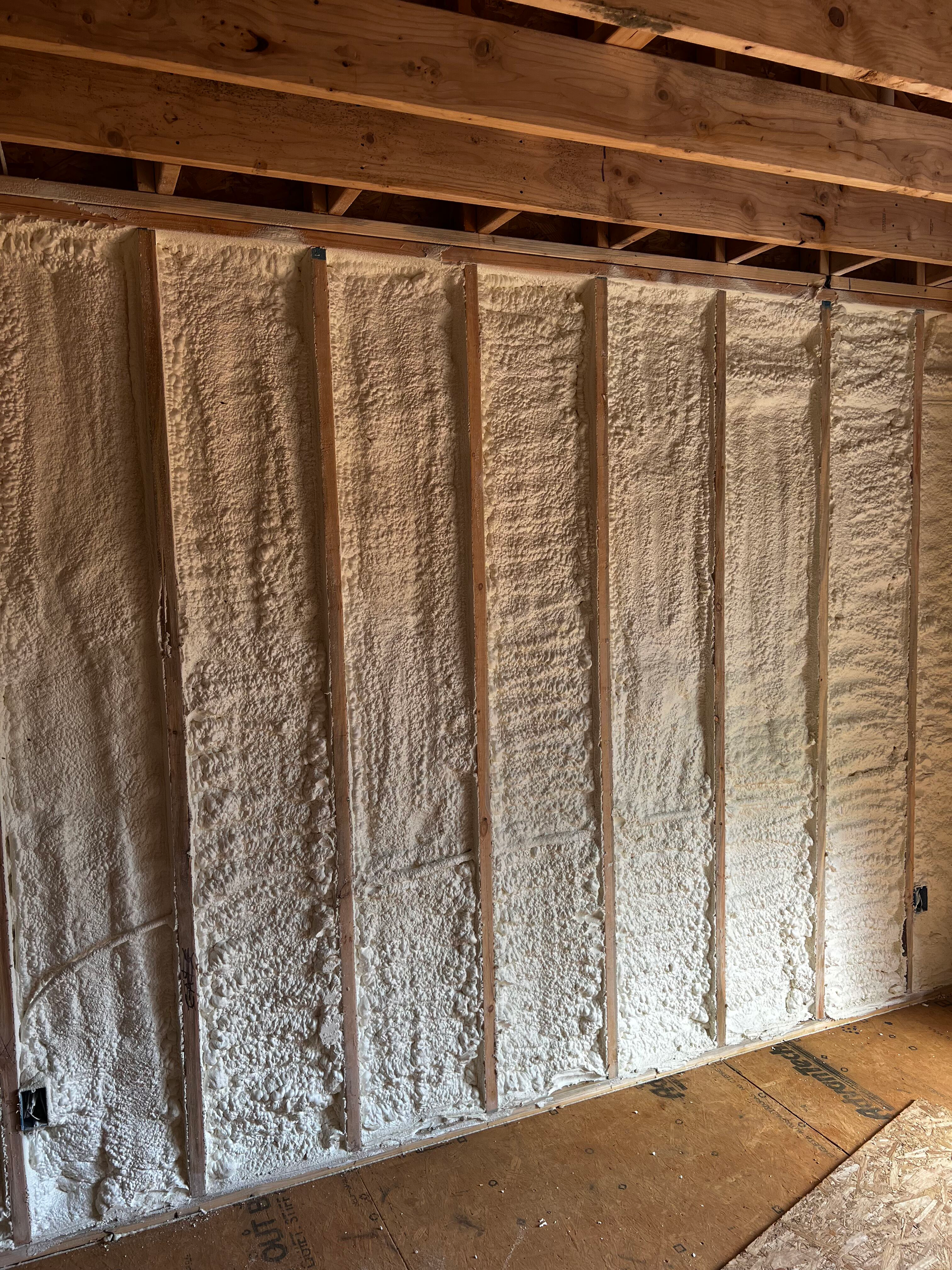
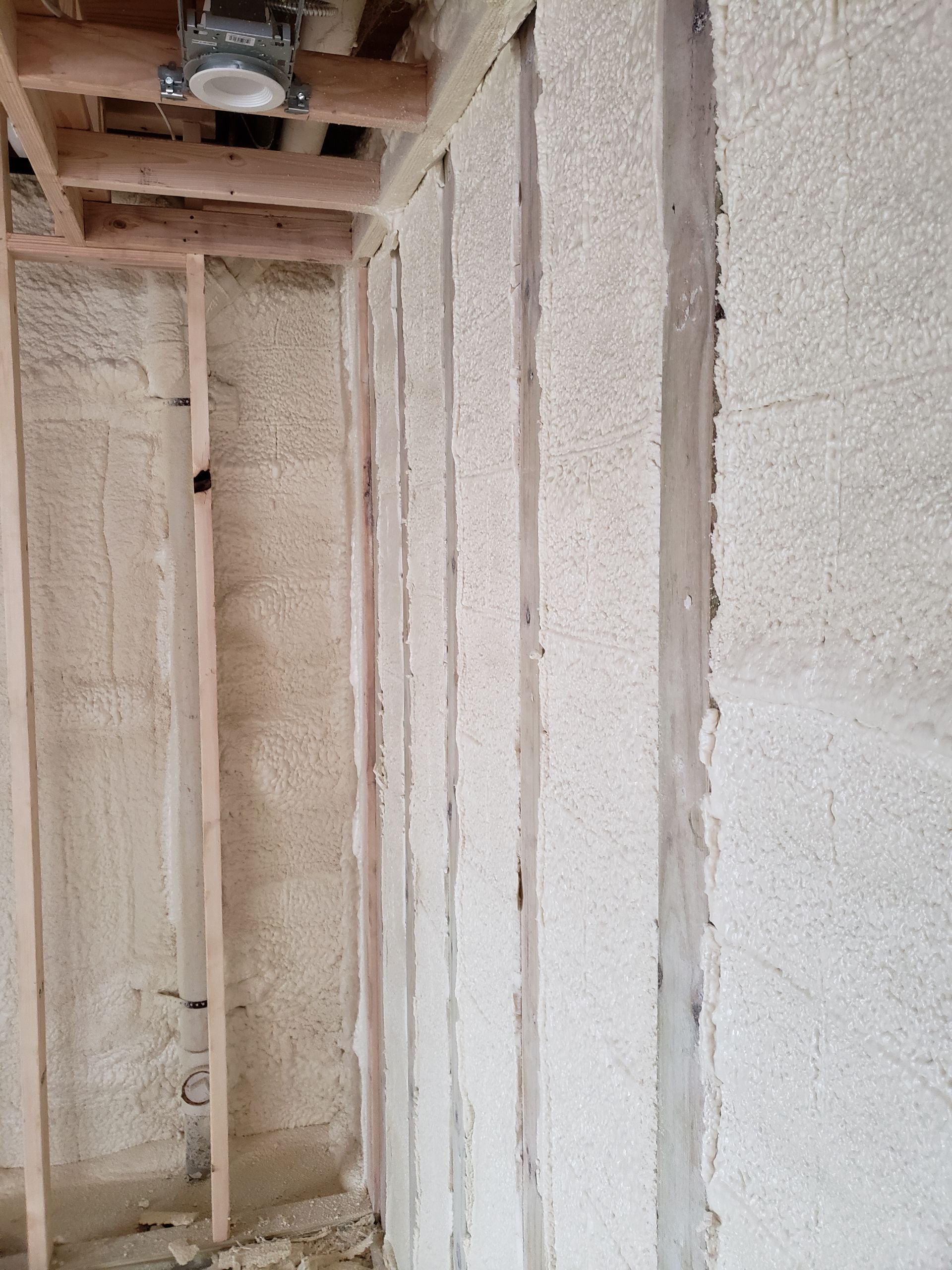
Spray foam goes on as a liquid, straight onto the underside of the panel, and expands in place. That single fact is what solves the problem.
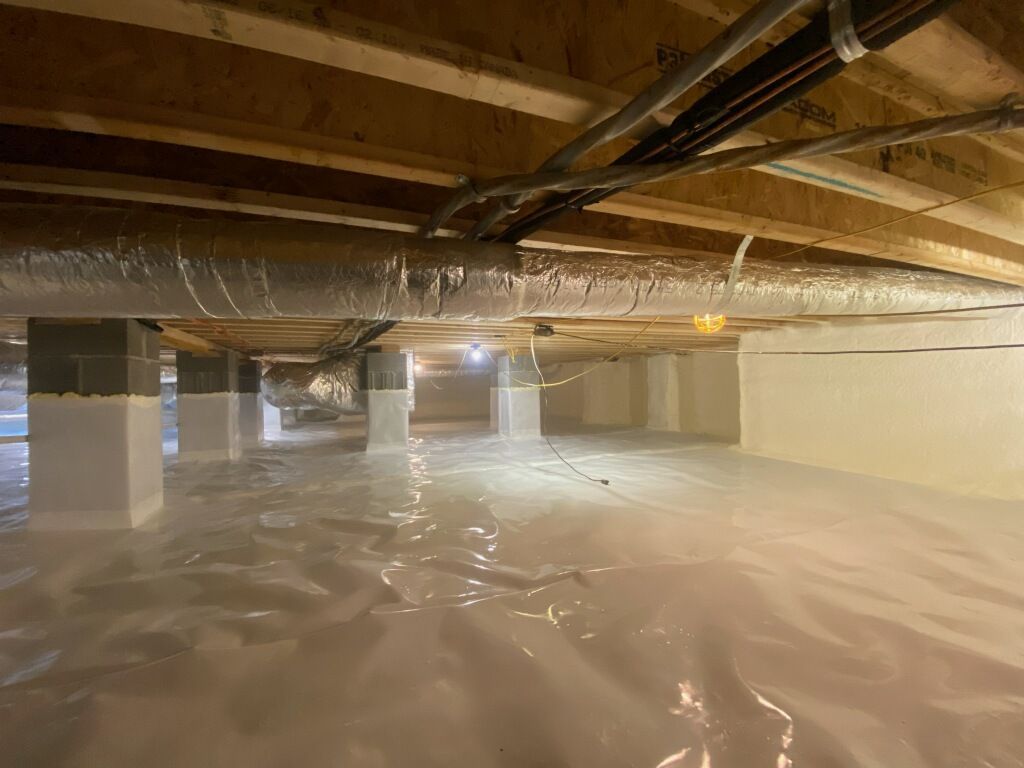
There is no gap. The foam bonds directly to the steel, so there is no cavity between the insulation and the panel and nowhere for humid air to reach a cold surface. You haven't managed the condensation, you have taken away the place it could form. There is no facing to tear and no seams to fail, because there are no seams.
Open-cell or closed-cell for your building?
We install both, and both are good foam. Which one goes into your building depends on the building itself, how you use it and what you want to spend. It isn't a rule, it's a judgement call, and it's one we make with you at the inspection.
Closed-cell is the denser of the two, roughly R-6 to R-7 per inch. It's rigid, it adds real stiffness to the panel assembly, and at the thicknesses used on a building it acts as its own vapor retarder. That makes it a strong choice where moisture control is the priority or where you want maximum R-value in minimum depth.
Open-cell is lighter and more affordable, around R-3.5 per inch, and it is an excellent air seal. It's also noticeably better at deadening sound, which matters more than people expect in a shop or a barn with a metal roof over it. It lets you cover more square footage for the same budget, and detailed correctly it performs very well in a metal building.
What matters in either case is that the foam is applied so there is no gap between the insulation and the steel, and that the assembly handles vapor properly for how the building is used. Get that right and both products do the job. We look at your building, ask how it's heated or cooled and what you keep in it, then tell you which one we'd put in and why.
Can it be done on a building that's already up?
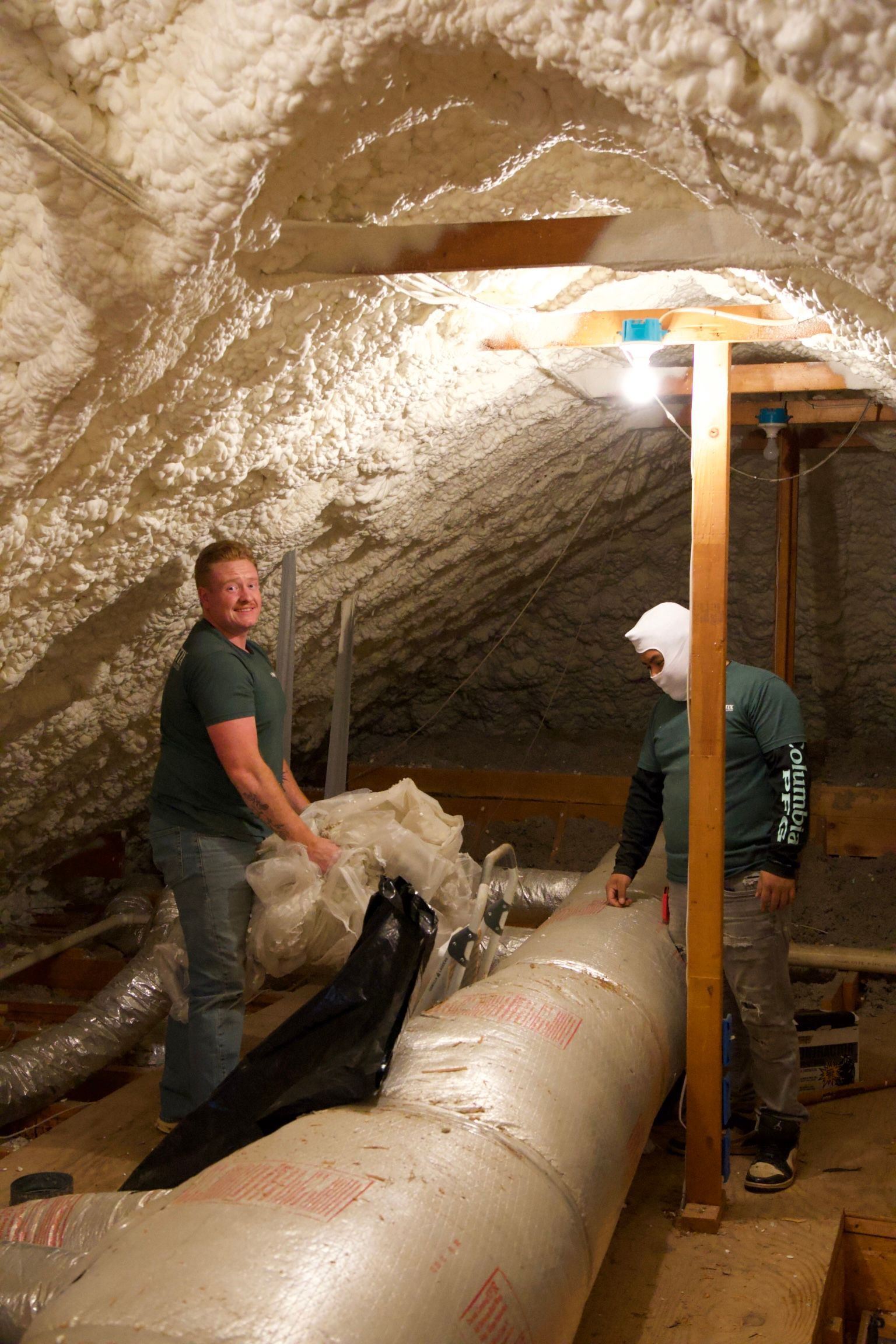
Yes, and most of the metal buildings we foam are existing ones. If there's old blanket insulation up there it comes out first, and we handle that
removal and disposal. The panel has to be clean and dry for the foam to bond, so we work around the weather. New construction is simpler, but a ten-year-old shop with a rust problem is a normal job, not a special one.
The short version
Water on your shop floor in August is not a roof leak. It's your building making rain out of its own air, on a surface that drops below the dew point most nights. Spray foam applied directly against the steel takes the condensing surface away entirely.
If your building is sweating, we'll come look at it and tell you what it needs. The inspection is free and there's no obligation. Call 423-710-2529, or read more about
metal building insulation.