You go under the house after a few days of rain and find a puddle in the low corner, mud where there should be dry dirt, or plastic floating on water. Is that normal? No. A crawl space should stay dry after rain. The good news is that it's one of the most fixable problems a house can have, as long as the fixes go in the right order.
Is water in a crawl space after rain normal?
Some dampness is normal in a vented crawl space around here. Bare dirt is rarely bone dry, and summer air under the house is heavy with humidity. Standing water is a different thing. Puddles, mud, a soaked liner or water lines on the foundation walls mean liquid water is getting in, and it will keep getting in every time it rains hard.
Chattanooga averages about 55 inches of rain a year, and a lot of homes here sit on clay at the foot of a ridge or a slope. Clay takes water in slowly, so a hard rain runs across the surface until it finds a low spot. Too often, the low spot is under your floor.
Liquid water or humidity: which one do you have?
- Liquid water. Puddles, mud, a wet liner, water lines or a white crust on the block walls. It shows up after storms and hangs around for days.
- Humidity. The dirt is damp but nothing is pooling. Ducts and pipes sweat, insulation sags, and the house smells musty in summer. It's worst in July and August, not right after a storm.
Plenty of crawl spaces have both. They are different problems with different fixes, and fixing one doesn't fix the other. If yours is mostly smell and sweating ducts, here's
why your crawl space smells musty.
Where the water is coming from
When we find water in a crawl space around Chattanooga, it almost always traces back to one of these:
- Downspouts and gutters. A downspout that empties right at the foundation puts a whole section of roof's worth of water against one wall. Clogged gutters spill over and do the same thing along the whole run.
- Ground that slopes toward the house. Soil settles next to older foundations. If the grade is flat or tips toward the house, rain runs in instead of away.
- Runoff from uphill. Houses at the bottom of a slope catch the water coming off the land above them. It finds its way through vents, block walls and the gap under the footing.
- Groundwater. On low lots and near creeks, the water table rises after long, soaking rains and water comes up through the crawl space floor itself. This is the one better gutters can't fix.
- Plumbing. A leaking supply line, drain or water heater can pass for rainwater. If the water is there when it hasn't rained, check the plumbing first.
What to do right now
- Be careful around power. If water is near wiring, a junction box, a furnace or a pump, stay out. Water and electricity in a tight space is a real hazard.
- Take photos. Note where the water sits, how deep it is and how long after the rain you found it. That tells us a lot about where it's coming from.
- Check gutters and downspouts. Clear them out and make sure every downspout empties several feet away from the house, not at the wall.
- Watch the yard in a hard rain. Look for water pooling against the foundation or running toward the house from uphill.
- Don't count on a dehumidifier. A dehumidifier pulls moisture out of the air. It does nothing about water coming in, and it will run nonstop trying.
When a sump pump is the fix
If water comes up from below, or keeps coming in after the gutters and grade are sorted out, the fix is a sump pump. We set the pump at the low point of the crawl space and run a discharge line that carries the water out and away from the house. The water gets somewhere to go besides your floor framing.
Not every house needs one. A lot of crawl space water around here is a downspout problem, and we'll tell you that plainly instead of selling you a pump you don't need. Here's how our
crawl space waterproofing works.
Why plastic alone won't fix it
A
crawl space vapor barrier stops moisture rising out of the ground as vapor. It is not built to hold back liquid water. Put plastic down in a crawl space that floods and the water just sits on top of it, or under it, against your wood and your foundation.
That's why the water gets handled first and the space gets sealed second. Once the water has a way out, we finish with
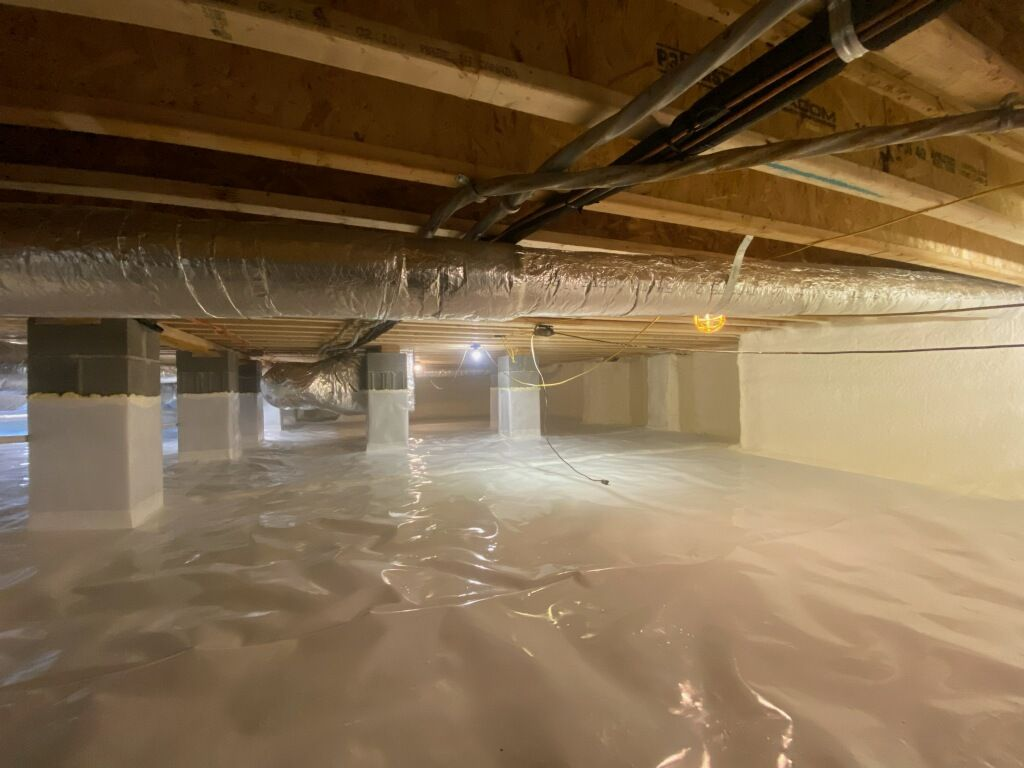
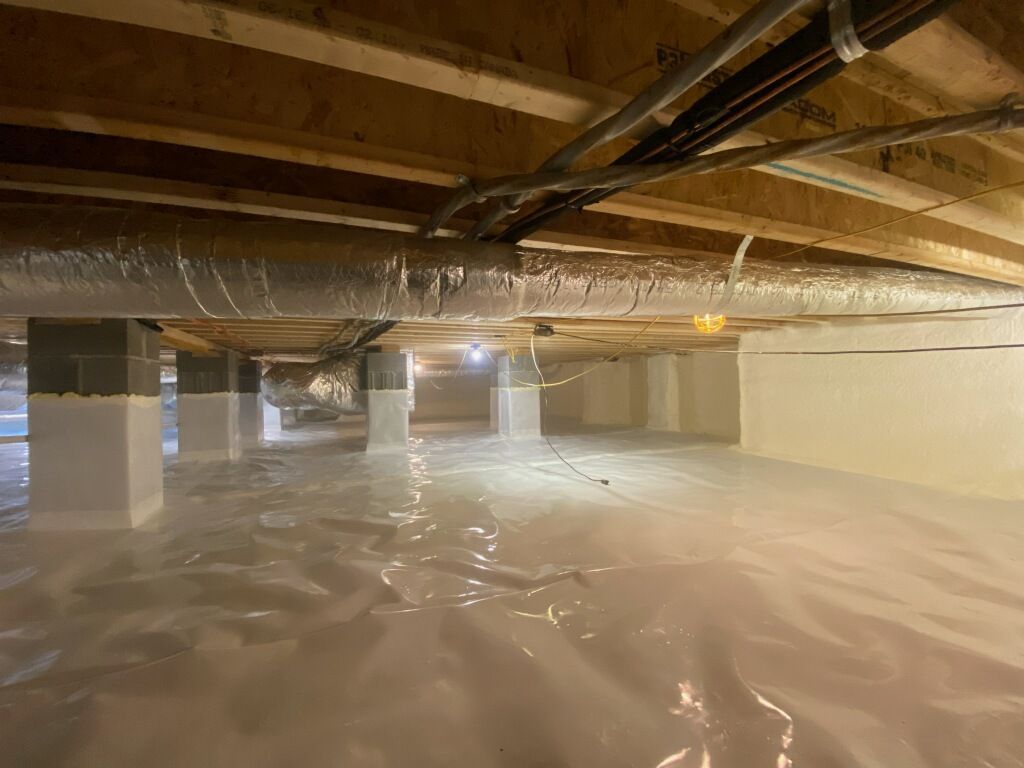
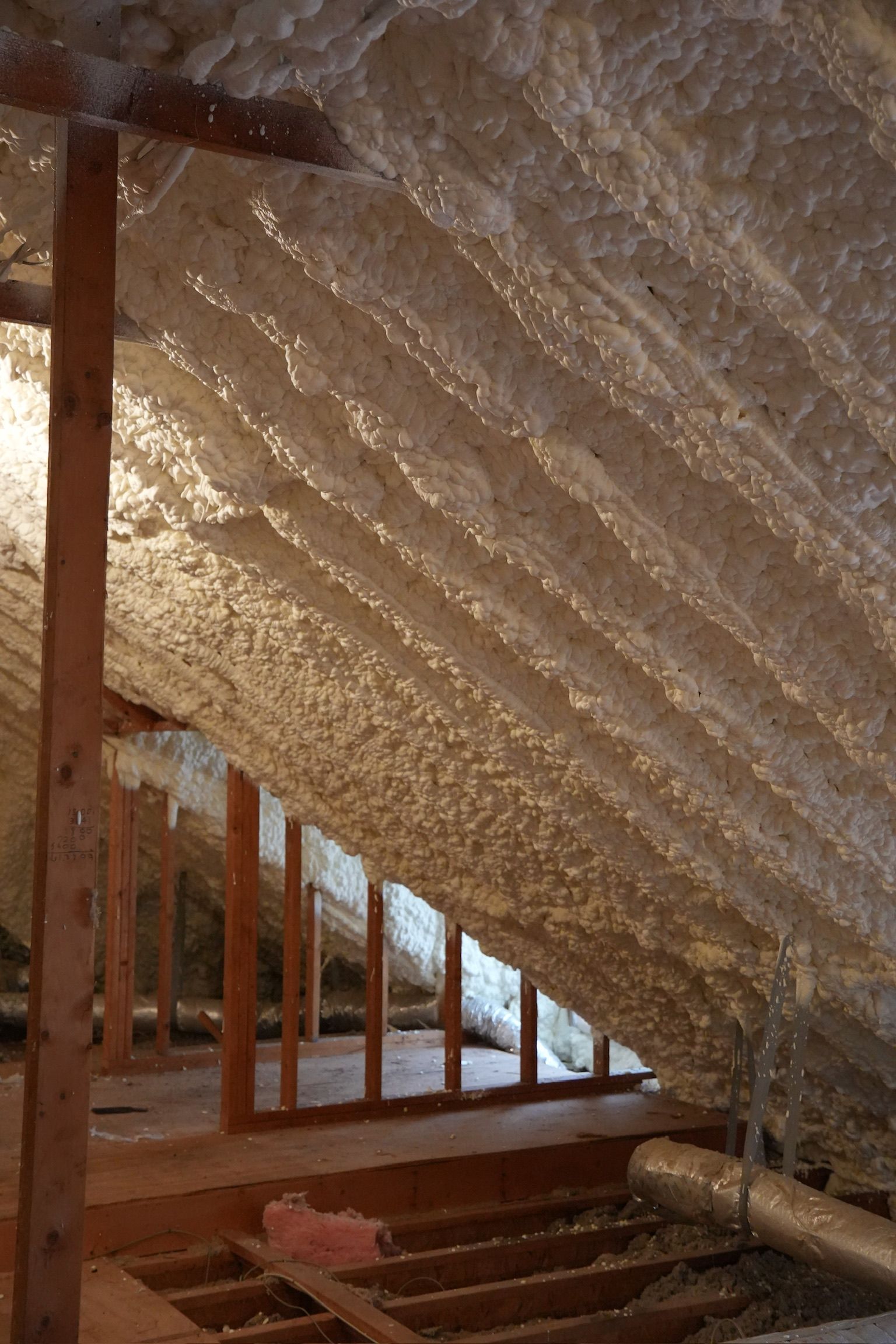
crawl space encapsulation: we seal the vents, foam the walls and rim joists, and seal a heavy liner over the floor. Done in that order, the crawl space stays dry without a dehumidifier.
What happens if you leave it
Water under the house doesn't stay under the house. Framing that stays wet rots. Old insulation soaks up water and falls off the joists. Mold grows on damp wood, and that air rises into the rooms above. Standing water draws termites and other pests and rusts ductwork and anything metal down there. The longer it goes, the more of the job turns from prevention into repair.
Water under your house? We'll come look, free
A Foametix evaluation is a real inspection. We go under the house ourselves, find where the water is coming from, and tell you plainly what it needs, whether that's a downspout fix you can handle yourself, a sump pump or a full encapsulation. Veteran-owned, our own crew, 17+ years in Chattanooga. Call
423-710-2529 or
request a free evaluation.